Thai Mango Sticky Rice — The Upgraded Version

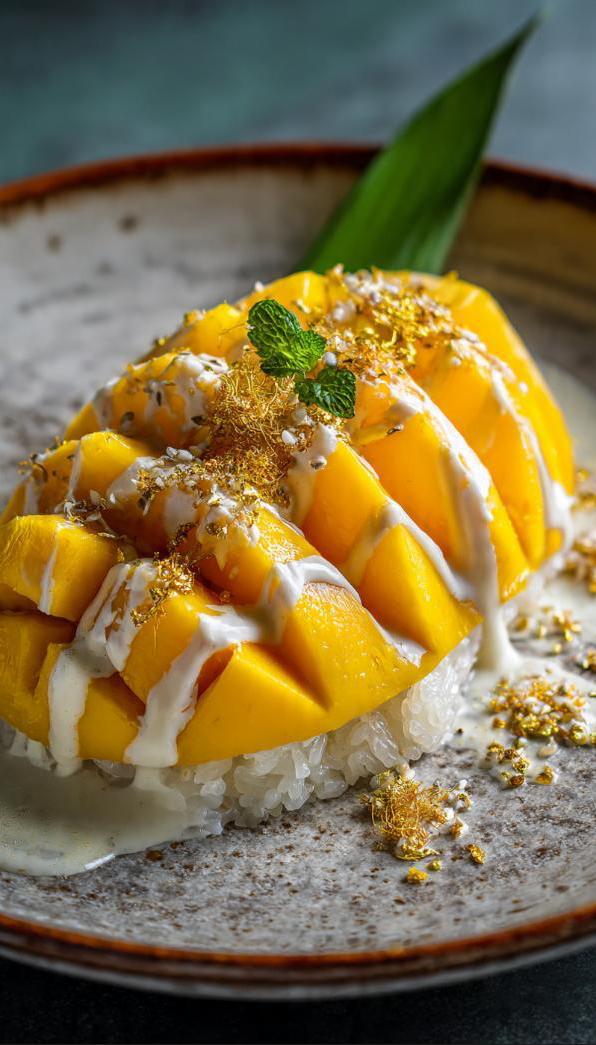
Thai Mango Sticky Rice — The Upgraded Version
The dessert that starts arguments. The coconut-to-rice ratio, the ripeness of the mango, the salt-in-the-cream debate — everyone has an opinion. This version settles the debate with technique. The sticky rice is chewy on the outside, tender inside. The coconut cream actually tastes like coconut. The mango is perfectly ripe. The salt is non-negotiable.
What You Need
- 2 cups glutinous sticky rice (sweet rice — not regular rice)
- 1 can (13.5 oz) full-fat coconut milk
- ¾ cup sugar (palm sugar preferred; cane sugar works)
- ½ tsp salt (this is not optional — see below)
- 2 ripe Ataulfo mangoes (yellow, yield to gentle pressure)
- Toasted sesame seeds for garnish
The Method
- Soak overnight. Rinse the sticky rice under cold water 4–5 times until the water runs nearly clear. Soak in fresh water for a minimum of 4 hours, preferably overnight. This is the single most important step and the one most recipes compress. Unsoaked sticky rice will cook unevenly — some grains rock hard, some mushy. Soaked sticky rice cooks uniformly.
- Steam it properly. Drain the rice. Spread loosely in a bamboo steamer lined with cheesecloth — don't pack it down. Steam over rolling water for 25–30 minutes. Test a grain from the center: it should be chewy with no hard white core. Undercooked sticky rice has an opaque center. Fully cooked sticky rice is translucent and chewy from edge to center.
- Make the coconut cream. Pour coconut milk into a small saucepan. Add sugar and salt. Heat over low — do not boil. Stir until sugar dissolves. The cream should feel slightly richer than regular coconut milk, not thick like pudding. If it thickens too much, you heated it too much. Coconut milk breaks (separates into curds and whey) at 180°F. Keep it under 175°F.
- Combine. Transfer hot sticky rice to a bowl. Pour about two-thirds of the warm coconut cream over the rice. Fold gently with a spatula until every grain is coated. Let it sit 10 minutes to absorb. The rice should feel creamy, not wet, when it's done absorbing.
- Slice the mango. Slice each mango along the flat pit into two cheeks. Score the flesh in a crosshatch and push up from the skin side — it fans out into mango cubes. This matters for Instagram if nothing else.
- Plate. Scoop sticky rice onto a plate or into a shallow bowl. Nestle the mango beside it. Drizzle the remaining coconut cream over the top. Toast sesame seeds in a dry pan until golden and sprinkle over the whole thing.
The AI Upgrades
The salt debate, settled: Half the internet says no salt in the coconut cream. The other half says it's the most important ingredient. Here's why: salt suppresses bitterness and amplifies sweetness. Without salt, the coconut cream tastes flat and the mango tastes sweeter by contrast — but the combination never quite clicks. With ½ teaspoon of salt, the coconut cream becomes savory-rich, and the mango tastes more like mango. The salt doesn't make it taste salty — it makes the sweet taste sweeter. This is a real taste science phenomenon. Try it both ways. You'll land on the salt side within one bite.
Troubleshooting — rice is hard in the center: You didn't soak it long enough, or you didn't spread it loosely in the steamer. Packed rice steams unevenly — the center gets trapped moisture and stays undercooked. Next time: soak overnight and spread the rice so there's air between grains. If it's already cooked and still hard in the center, return it to the steamer for 5 more minutes.
Troubleshooting — coconut cream has curdled: You boiled it. Coconut milk breaks at 180°F into curds and whey. If it's already curdled, you can blend it briefly with an immersion blender — it'll be thinner but smoother than lumpy. Prevention: keep the heat at low and stir constantly. If you're nervous, use a double boiler.
Mango selection: Ataulfo (Champagne) mangoes are the right choice — yellow skin, slightly soft to touch, aromatic at the stem end. Red mangoes (Tommy Atkins) are underripe, fibrous, and less sweet. If your mango is still hard, leave it on the counter at room temperature for 2–3 days. It'll ripen. A ripe mango yields slightly to gentle pressure and smells sweet at the stem end. If it's rock hard, it's not ready. If it's mushy, it's too ripe. You want the middle ground.
Creative twist — the toasted coconut upgrade: Toast ¼ cup of shredded coconut in a dry pan until golden. Sprinkle over the top along with the sesame seeds. The toasted coconut adds a different kind of nuttiness from the sesame — it's coconut-on-coconut, but the texture contrast of crunchy toasted shreds against chewy sticky rice and soft mango makes every bite more varied.
The Science Notes
Why soak: Sticky rice (glutinous rice) has a dense starch structure that resists water penetration in its dry state. Soaking for 4+ hours allows water to diffuse into the starch granules, which then gelatinize uniformly during steaming. The result: every grain cooks at the same rate. Without soaking, the outer layers gelatinize while the core remains dry and resistant.
Why salt amplifies sweetness: Salt suppresses bitter taste receptors and enhances the activity of sweet taste receptors. A 0.5% salt solution (about ½ tsp salt in 1 cup liquid) increases perceived sweetness by approximately 10–15% without making the liquid taste salty. This is why salted caramel tastes more like caramel than sweet caramel. The same principle applies to the coconut cream in this dish.
Why don't boil coconut milk: Coconut milk is an emulsion — fat droplets suspended in water. At 180°F, the protein that stabilizes the emulsion denatures (unfolds), and the fat and water phases separate. You see this as curdling: white protein clumps in a thin, watery liquid. Below 175°F, the emulsion stays stable. Low heat + constant movement = creamy coconut cream. High heat = curdled mess.
Upgraded with AI assistance — traditional base, elevated intelligence. Always taste as you go.