Thai Khao Soi — The Upgraded Version

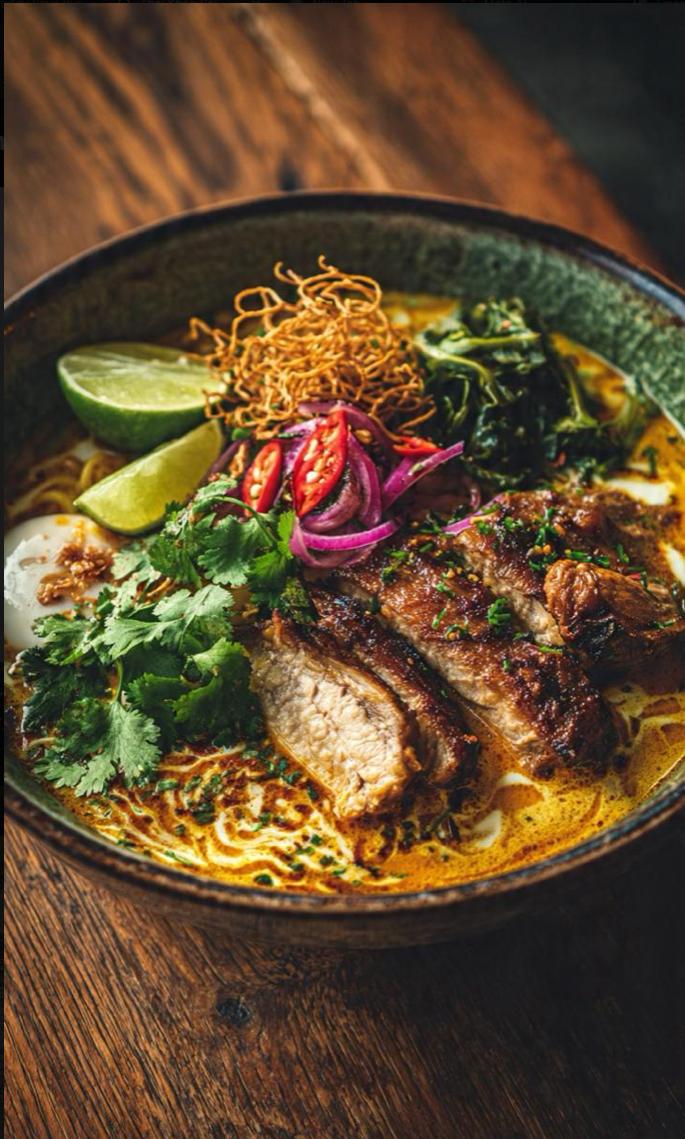
Thai Khao Soi — The Upgraded Version
Khao soi is the Northern Thai dish that everyone should know about. The contrast of soft egg noodles in creamy curry broth and crispy fried noodles on top — that's the hook. This version keeps the Chiang Mai foundation and adds the intelligence that makes the difference between "interesting soup" and "why don't more people know about this dish."
What You Need
- 4 cups chicken stock (low-sodium, homemade if possible)
- 1 can (13.5 oz) full-fat coconut milk
- 3 tbsp yellow curry paste (Mae Ploy or homemade)
- 1 tbsp fish sauce
- 1 tsp sugar
- 1½ lbs chicken thighs, bone-in (bone adds depth)
- 8 oz fresh egg noodles, wide (¼-inch)
- Oil for frying noodles
- Pickled mustard greens (optional but essential)
- Lime wedges, cilantro, shallots, chili oil
The Method
- Curry the coconut. Heat coconut milk over medium. Add yellow curry paste. Cook 3 minutes, stirring, until the oil separates and the paste deepens from bright yellow to a richer golden-orange. Under-fried curry paste = raw, grainy taste. Wait for the oil separation.
- Build the broth. Add chicken stock, fish sauce, sugar. Bring to a gentle simmer. Drop in the bone-in thighs. Cover, simmer 25–30 minutes until the meat is falling off the bone.
- Shred and strain. Remove chicken, shred the meat, discard bones and skin. Strain the broth through a fine-mesh sieve back into the pot. Straining removes any bits of bone, cartilage, or curry paste that didn't fully dissolve. The broth should be glossy and golden, not cloudy.
- The two-noodle technique. Cook all the noodles in boiling water, but undercook half by 1 minute. Drain both portions separately. The fully-cooked half goes in the bowl. The undercooked half gets fried.
- Fry for crunch. Heat ¼ inch of oil to 350°F. Working in small batches, drop the undercooked noodles in. They'll puff and crisp in 60–90 seconds. Drain on paper towels immediately — they continue crisening as they cool. This is the crunch layer that makes khao soi unique.
- Assemble. Portion soft noodles into deep bowls. Ladle hot broth over them. Top with shredded chicken. Arrange crispy noodles in a neat pile on top — they should sit above the broth, not submerged. If you put them in early, they get soggy. This matters.
- Garnish bar. Pickled mustard greens, lime, cilantro, shallots, chili oil on the side. Each eater builds their own bowl.
The AI Upgrades
Why bone-in thighs: Bone-in chicken releases collagen and marrow compounds during the 25-minute simmer. These compounds thicken the broth slightly and add a richness that boneless chicken can't provide. The difference is subtle but real — it's the difference between a broth that coats your tongue and one that just runs past it.
The two-noodle timing: Most people cook all the noodles the same amount. But you need one batch that stays chewy in the broth and one batch that crisps up in oil. Undercook the second batch by exactly 60 seconds — enough that it's not mushy when fully cooked, but undercooked enough that a quick fry turns it crispy without burning. Test one noodle from each batch before you commit.
Troubleshooting — crispy noodles get soggy: You put them in the bowl too early or the broth isn't hot enough. Crispy noodles must sit above the broth, not in it. And the broth must be boiling-hot when you pour it — the heat creates a barrier of steam between the broth surface and the noodles for about 60 seconds before the steam dissipates. Pour fast.
Troubleshooting — curry paste tastes raw: You didn't fry it long enough in the coconut milk. Count to 180 seconds at minimum. Watch for the color shift and the oil separation. If you're in a hurry, bloom the paste in a little oil first, then add coconut milk — the oil bloom releases the aromatics faster than coconut cream bloom.
Weeknight hack (30 minutes): Use pre-cooked rotisserie chicken instead of simmering thighs. Shred it and add to the pre-made broth right before serving. The broth can be made in 15 minutes (skip the chicken simmer). It's not the real-deal khao soi, but it's a respectable bowl in half an hour.
Creative twist — the double-curry technique: Bloom half the curry paste in coconut milk for the broth (step 1). Then fry the other half in a tiny bit of oil and stir it into the shredded chicken before topping the bowl. The fried paste on the chicken hits a different flavor note than the coconut-milk-bloomed paste in the broth. It's the same ingredients, twice the depth.
The Science Notes
Why strain the broth: Straining removes undissolved curry paste solids, bone fragments, and any scum that rose during simmering. A strained broth is glossy and focused. An unstrained broth is muddy and inconsistent — some bites have more paste, some have less. Straining equalizes the flavor distribution across every bowl.
Why coconut milk bloom vs. oil bloom: Curry paste has both water-soluble and fat-soluble aromatic compounds. Blooming in coconut milk extracts the fat-soluble compounds. Blooming in oil extracts the same fat-soluble compounds plus some additional compounds that don't release in water-based liquid. Blooming twice — once in coconut milk for the broth, once in oil for the chicken topping — extracts the broadest possible range of flavors from the same paste.
The steam barrier: Boiling-hot broth poured over noodles creates a 1–2cm layer of steam above the liquid surface. Steam is less dense than liquid, so the crispy noodles sit in the steam zone, not the liquid zone, for approximately 60 seconds before the steam dissipates. After that, the noodles begin absorbing moisture from the broth and losing their crunch. Serve fast.
Upgraded with AI assistance — traditional base, elevated intelligence. Always taste as you go.