Pad Thai — The Upgraded Version

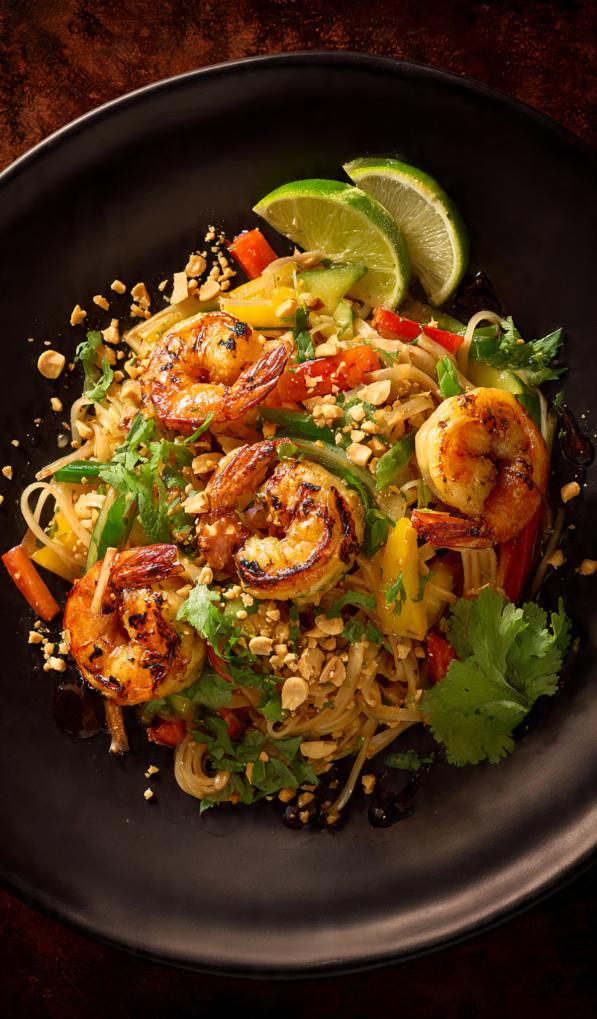
Pad Thai — The Upgraded Version
The dish that made Thai food famous in America. The version below is the same foundation — tamarind, fish sauce, palm sugar, high-heat wok — but with the intelligence layer that most pad Thai recipes are missing. The troubleshooting. The science. The weeknight hack. The creative twist.
What You Need
- 8 oz dried wide rice noodles (sen lek — the flat, wide ones, not the thin round ones)
- ½ lb chicken thigh, diced small (or shrimp, peeled and deveined)
- 3 cloves garlic, minced fine
- 2 eggs, lightly beaten with a pinch of salt
- 3 tbsp tamarind paste (the concentrated kind, not the watery sauce)
- 2 tbsp fish sauce (Red Boat if you can find it — the funk matters)
- 1½ tbsp palm sugar (melted in a dry pan first)
- 3 tbsp crushed roasted peanuts
- 2 tbsp dried shrimp (rehydrate in warm water 5 minutes, then drain and mince)
- 2 tbsp bean sprouts
- 2 green onions, sliced on the bias
- 2 tbsp neutral oil (peanut or canola)
- Lime wedges, chili powder, extra bean sprouts for serving
The Method
- Soak the noodles. Warm water, 8–10 minutes, until pliable but still firm in the center. Drain completely. No exceptions — undercooked noodles finish in the wok. Overcooked noodles become a sticky brick. Test one: bite through the center. If there's a white spot, it needs more time. If it's fully soft with no core resistance, it's ready. Drain and set aside.
- Mise en place. Everything measured, everything chopped, sauce mixed in a small bowl. Pad Thai cooks in 2 minutes from start to finish. If you're chopping garlic while the wok heats, you've already lost. Measure the tamarind, fish sauce, and palm sugar together before you start — that's your sauce. Ready to pour the second the noodles hit the wok.
- Get the wok smoking. Oil over maximum heat until it shimmers. Drop in the garlic — it should sizzle aggressively. 10 seconds, not more. Garlic burns in 30 seconds at wok heat. If it's browning before you add the protein, your heat is too high or you waited too long.
- Protein next. Chicken or shrimp, spread in a single layer. Let it sear 30 seconds before stirring. You want a golden edge, not gray steam. 2 minutes total — just cooked through, still juicy inside.
- Push and pour. Push protein to the side of the wok. Pour egg into the empty center. Let it set 10 seconds, then scramble into ribbons. Fold the egg back with the protein.
- Noodles in. Toss the drained noodles across the entire wok surface — not just in the center. You want the noodles to contact the hot metal directly. Pour the sauce over everything in one motion.
- The toss. 60 seconds of aggressive tossing with a spatula and a wrist. The noodles should coat evenly, the sauce should caramelize at the edges of the wok. If you see steam rising and noodles sticking, keep moving. High heat + movement = the char that makes pad Thai taste like street food.
- Bean sprouts and scallions. Fold in. 30 more seconds. They stay crunchy. If they go soft, you cooked too long.
- Plate and top. Crushed peanuts, lime, chili, extra bean sprouts on the side.
The AI Upgrades
Troubleshooting — Sauce too sweet: Add tamarind, ½ teaspoon at a time. The balance is 3 tamarind : 2 fish sauce : 1.5 sugar by volume. Memorize that ratio. If it's too sour, add more sugar. If it's too salty, add tamarind (never add plain water — it dilutes the flavor without fixing the imbalance).
Troubleshooting — Noodles are sticky: They were either under-drained or under-soaked. Next time, drain noodles longer and don't overcrowd the wok — steam from excess moisture makes noodles sticky. If it happens mid-cook, add a splash of water and keep tossing. It'll loosen up.
Troubleshooting — No char on the noodles: Your heat isn't high enough. Pad Thai needs wok-level heat — 500°F+ at the metal surface. If you're cooking on a residential stove, preheat the wok for 5 minutes before adding oil. A carbon steel wok retains heat better than stainless. Cast iron works but is slower to recover between tosses.
Weeknight hack (20 minutes): Buy pre-soaked fresh rice noodles from the Asian market. Skip the soak step. They cook in 2 minutes in boiling water. The rest of the method is identical. The only trade-off: fresh noodles don't hold sauce as well as dried, so the sauce penetrates faster and you need slightly less. The result is still solid.
Creative twist — the egg upgrade: Add a tablespoon of Sriracha to the beaten egg before it hits the wok. The egg cooks into spicy ribbons that distribute chili throughout every bite instead of sitting on top as a sauce. It changes the eating experience because the heat is structural, not topical.
The Science Notes
Why wide noodles: Wide rice noodles (sen lek) have more surface area per noodle, which means more sauce adhesion and better char. Thin noodles turn to mush at wok heat. Wide noodles hold their structure through a 60-second toss at 500°F. This is physics, not preference.
Why don't rinse after cooking: The residual starch on drained noodles helps the sauce adhere. Rinsing washes it away and the sauce slides off into the bottom of the wok instead of coating the noodles. Drain well but don't rinse.
The caramelization mechanism: Palm sugar + tamarind + high heat = Maillard reaction at the surface of the noodles. This is the wok hei — the breath of the wok. It only happens above 450°F with constant movement. Low and slow pad Thai tastes like pasta with sauce. High and fast pad Thai tastes like street food.
Upgraded with AI assistance — traditional base, elevated intelligence. Always taste as you go.