Pad Thai — The Street Food Classic Done Right

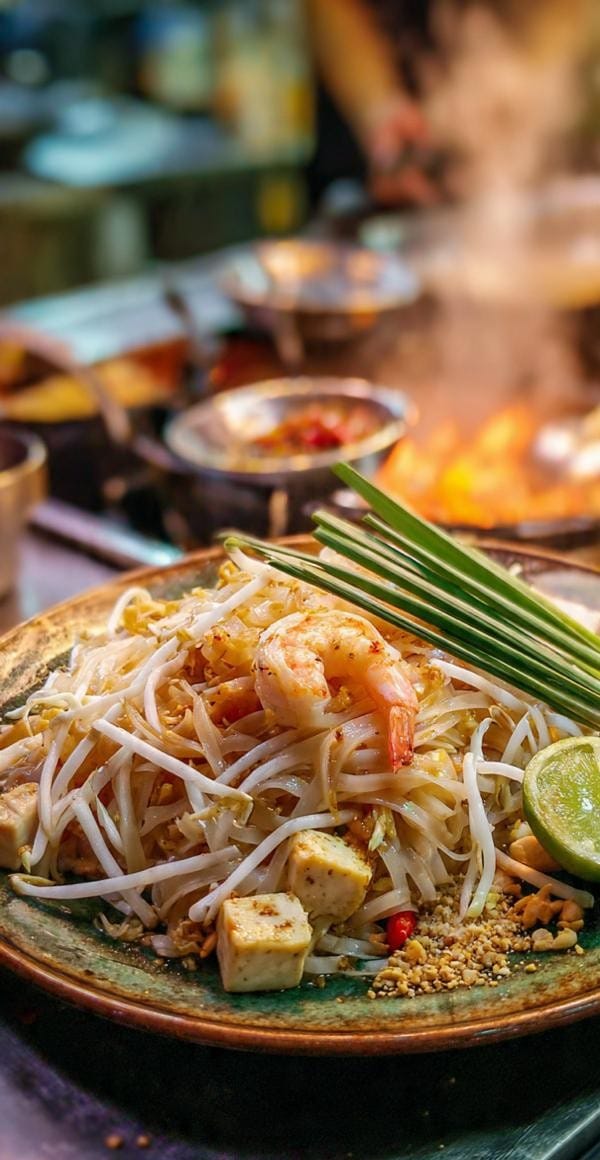
Pad Thai — The Street Food Classic Done Right
Pad Thai is the dish that made Thai food famous in America, and honestly? Most of what gets served here is a polite imitation. Real pad Thai isn't just rice noodles tossed with sauce — it's the interplay of salty, sour, sweet, and umami, cooked at such high heat in a wok that the noodles get a slight char and the tamarind caramelizes on the edges.
This version gets as close as I can manage in a home kitchen.
What You Need
- 8 oz dried wide rice noodles (sen lek — not the thin ones)
- ½ lb chicken thigh, diced or shrimp, peeled and deveined
- 3 cloves garlic, minced
- 2 eggs, lightly beaten
- 3 tbsp tamarind paste
- 2 tbsp fish sauce
- 1½ tbsp sugar (palm sugar, melted in a pan first)
- 3 tbsp crushed roasted peanuts
- 2 tbsp dried shrimp (optional but authentic)
- 2 tbsp bean sprouts
- 2 green onions, sliced
- 2 tbsp cooking oil
- Lime wedges for serving
The Method
- Soak the noodles. Cover rice noodles with warm (not hot) water for 8–10 minutes until they're pliable but still firm in the center. Drain well. This is the step everyone skips and then wonders why their pad Thai is a noodle brick.
- Prep your ingredients first. Pad Thai cooks in 2 minutes. Mise en place or you will burn things. Garlic, eggs, sauce components, toppings — have them ready before the wok touches the burner.
- High heat. Heat oil in a wok until shimmering. Drop in the garlic — it should sizzle immediately. 10 seconds, then in with the protein. Stir-fry until just cooked, about 2 minutes. Push the protein to the side.
- The egg. Pour the beaten egg into the empty space of the wok. Scramble it quickly until just set, then fold it together with the protein.
- The noodles. Toss the drained noodles into the wok. Add tamarind paste, fish sauce, and melted palm sugar. Toss aggressively for 60 seconds on maximum heat. The noodles should absorb the sauce and start to caramelize on the edges.
- Bean sprouts and scallions. Toss in the bean sprouts and green onions. Another 30-second toss. They stay crunchy — this is the texture contrast that makes pad Thai work.
- Serve. Plate immediately. Top with crushed peanuts, extra lime, a sprinkle of chili powder if you want heat, and a few more bean sprouts on the side for crunch.
The Sauce Balance
Taste the sauce before it hits the noodles. It should hit all four notes: sour from the tamarind, salty from the fish sauce, sweet from the palm sugar, and a deep umami from the dried shrimp if you're using them. If one note is missing, adjust before cooking. Once the noodles are in, it's too late.
Noodle Note
Use wide rice noodles (sen lek). Thin noodles turn mushy. Wide ones hold the sauce and the char. Don't cook them past the chewy stage — they keep cooking in the hot wok for another 30 seconds after you plate them.
Recipe generated with AI assistance — tested against the versions I've eaten around town.