Malaysian Laksa — The Upgraded Version

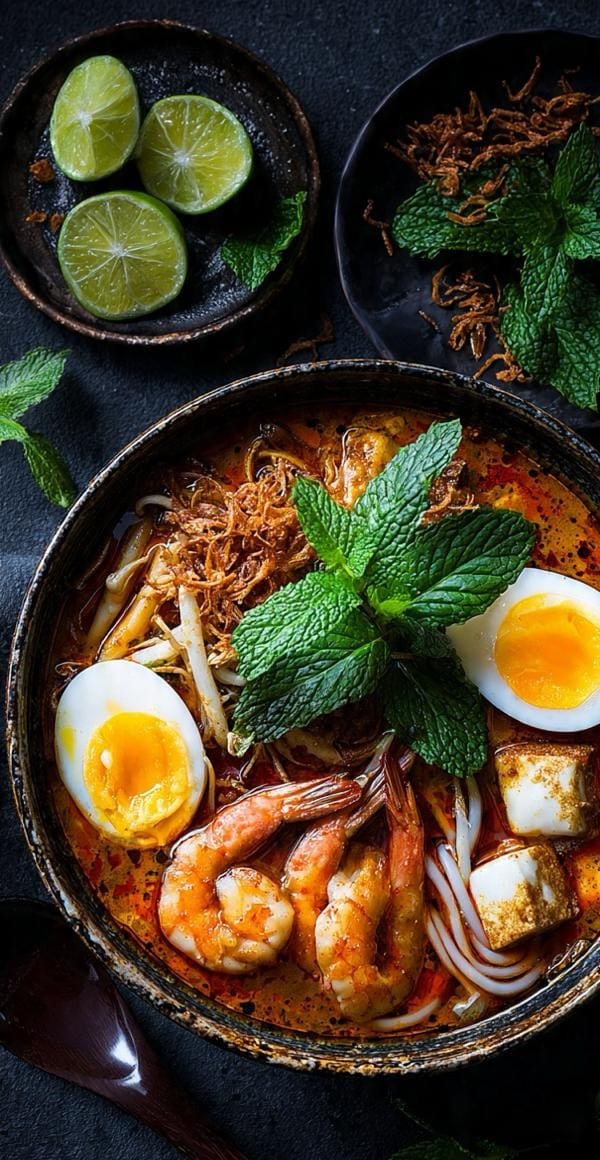
Malaysian Laksa — The Upgraded Version
Laksa is coconut curry noodle soup that changes your definition of what a noodle soup can be. The Malaysian version (specifically asam laksa from Penang) is sour, spicy, seafood-heavy, and made with a tamarind fish broth that hits every flavor receptor at once. This version keeps the traditional asam laksa foundation and adds the intelligence that makes the broth sing.
What You Need
- 4 cups fish stock (use whole fish heads/bones if possible — they add depth that stock cubes can't match)
- 1 can (13.5 oz) full-fat coconut milk
- 3 tbsp asam paste (tamarind paste — concentrated)
- 2 tbsp chili paste (sambal or homemade)
- 1 tbsp belachan (shrimp paste, toasted)
- 1 tbsp fish sauce
- 1 tsp sugar
- 8 oz thick rice noodles (laksa noodles — the round, thick ones)
- ½ lb shrimp, peeled and deveined
- ½ lb firm white fish (snapper, cod), cut into bite-sized chunks
- ½ cup cucumber, julienned
- ½ cup pineapple, cubed (fresh, not canned)
- ¼ cup mint leaves
- 2 hard-boiled eggs, halved
- Fried shallots for garnish
The Method
- Toast the belachan. ½-inch piece in a dry pan, medium heat, 1 minute until fragrant. Crumble and set aside. This is the umani anchor — don't skip it.
- Bloom the aromatics. Heat coconut milk in a pot over medium heat. Add asam paste, chili paste, toasted belachan. Cook 3 minutes until fragrant and the oil separates from the coconut milk. The color should shift from white to a creamy orange-pink.
- Build the broth. Add fish stock, fish sauce, sugar, and sugar. Bring to a gentle simmer. Taste — it should be sour from the tamarind first, then heat from the chili, then umami from the belachan and fish sauce. Adjust: more asam for sour, more chili for heat, more fish sauce for depth.
- Cook the seafood. Drop shrimp in first — 2 minutes until pink. Then fish — 3 minutes until just cooked through. Don't overcook the fish — it falls apart if you boil it too long. The residual heat finishes it.
- Cook the noodles. In a separate pot of boiling water, cook rice noodles according to package directions. Drain. Portion into deep bowls.
- Ladle. Pour the hot broth and seafood over the noodles. Top with cucumber, pineapple, mint, hard-boiled egg, and fried shallots.
The AI Upgrades
Why whole fish stock: Laksa broth needs a fishy, oceanic depth that chicken or vegetable stock can't provide. Fish heads and bones (from snapper, red snapper, or rockfish) release collagen and glutamates that create a broth with body and depth. If you can't get whole fish, buy the best fish stock you can find (look for one made with actual fish, not just "seafood flavor"). Don't use chicken stock — it changes the entire character of the dish.
Troubleshooting — broth is too sour: Add a pinch of sugar or a splash more coconut milk. Asam (tamarind) is powerfully sour — it should hit you first, but not overwhelm you. The sweetness of the coconut milk and the sugar creates the balance. In proper asam laksa, the sourness is supposed to be prominent — it's a sour soup, not a curry. If it's genuinely too sour, you cooked the asam too long; it intensifies as it simmers.
Troubleshooting — broth has no depth: You used weak fish stock or skipped the belachan. Belachan (toasted shrimp paste) is the deepest, most umami-forward ingredient in this dish — it's the difference between a thin broth and one that tastes like it's been cooking all day. Toast it properly and don't be shy with it.
If you can't find laksa noodles: Thick rice noodles (the round ones, not flat) are the closest substitute. Udon is too thick and wrong texture. Egg noodles are wrong flavor profile. If all you can find is regular rice noodles, use them but expect a slightly different mouthfeel.
Creative twist — the cockle addition: If you can find fresh cockles (kerang) at an Asian market, add ½ lb cleaned cockles to the broth 2 minutes before serving. They steam open in the hot broth and release their own briny liquid into the soup. This is the Penang street version — cockles, shrimp, and fish all in the same bowl. The brininess from the cockle liquor transforms the broth into something that tastes like the ocean.
The Science Notes
Why coconut milk bloom: The asam (tamarind) and belachan (shrimp paste) have both water-soluble and fat-soluble flavor compounds. Blooming them in coconut milk (50% fat) extracts the fat-soluble compounds, which carry the deeper, slower notes. A straight water-based extraction (adding all ingredients to water at once) misses these compounds entirely. The oil separation you see when cooking is the visual evidence that the fats are carrying and distributing these flavors.
The sourness curve: Asam (tamarind) releases citric and tartaric acids in proportion to temperature and time. Higher temperature and longer simmer = more acid extraction. If you simmer asam for 20 minutes, it'll be significantly more sour than if you add it at the end. The proper balance: add it at the broth-building stage (step 3) and simmer briefly (5–7 minutes), then adjust with sugar or coconut milk at the end.
Why pineapple on top: Pineapple contains bromelain, an enzyme that slightly tenderizes protein. In the context of laksa, a few bites of pineapple between fish chunks add a textural and enzymatic contrast to the tender fish. The bromelain effect is minimal at room temperature, so the pineapple doesn't "cook" the fish — it just sits there providing sweet-sour crunch that cuts through the rich coconut broth.
Upgraded with AI assistance — traditional base, elevated intelligence. Always taste as you go.