Lao Tom Yum — The Upgraded Version

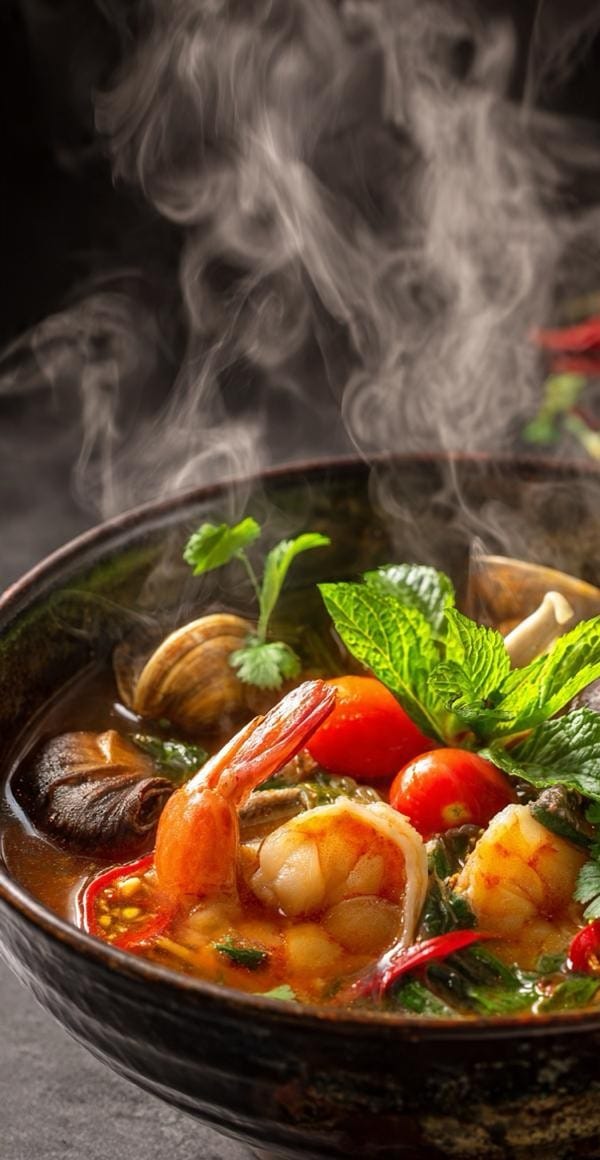
Lao Tom Yum — The Upgraded Version
Most tom yum in America is sweetened into submission. Real Lao tom yum is sharp, herbal, bright with lime, and hot enough to make you sweat. This version keeps the traditional aromatics and adds the intelligence that prevents the most common mistakes — the ones that turn a great soup into a disappointing one.
What You Need
- 4 cups chicken stock (or water for maximum herb intensity)
- 3 stalks lemongrass, bottom third only, outer leaves removed
- 2 thumbs galangal, sliced into thin coins
- 6 kaffir lime leaves, torn in half (bruise each one)
- 3–4 bird's eye chilies, crushed (adjust heat to taste)
- 3 tbsp fish sauce (Red Boat)
- 3 tbsp fresh lime juice
- ½ lb shrimp, shell-on
- ½ lb chicken thigh, sliced thin
- 1 cup cilantro, stems and leaves, roughly chopped
- ½ cup green onions, sliced
The Method
- Infuse cold. Combine stock (or water), lemongrass, galangal, kaffir lime leaves, and chilies in a pot. Bring to a gentle simmer — small bubbles, not a rolling boil. Simmer exactly 10 minutes. Not 5, not 15. The aromatics release their oils in a predictable arc — sharpest at 8–10 minutes, then they start declining after 15.
- Strain. Pour through a fine-mesh sieve into a clean pot. Discard the solids. The broth should smell intensely of lemongrass and lime. If it smells like hot water, your aromatics were old or the simmer was too brief. Fresh aromatics = fresh-smelling broth.
- Cook the protein. Bring strained broth to a simmer. Add chicken first — 3 minutes. Then shrimp — 2 more minutes. Shrimp are done when they curl and turn pink. Don't overcook — rubbery shrimp ruin the entire bowl.
- The final seasoning (critical timing): Turn off the heat. Add fish sauce, lime juice, and a pinch of sugar. Do this at the very end — lime juice loses its brightness when cooked. The residual heat is enough to marry the flavors without killing the lime.
- Herb finish. Stir in cilantro and green onions right before serving. The residual heat releases the cilantro oils. Don't cook the herbs — they should taste bright, not wilted.
The AI Upgrades
Troubleshooting — broth is sweet, not sharp: Too much sugar or the lime juice was added too early. The lime must go in last — after the heat is off. Sugar in the broth rounds off the sharp edges. If you taste it and it's sweet, add more lime, not more fish sauce. Each lime wedge should brighten the entire bowl.
Troubleshooting — broth is cloudy: The simmer was too hard, or the stock was cloudy to begin with. High heat emulsifies fat into the water phase, creating a milky suspension. Keep it at a gentle ripple. If the stock itself is cloudy (from store-bought bone broth), you can clarify it with egg whites — whisk 2 egg whites into the cold stock, bring to a simmer, and the egg coagulates and traps cloudiness. Strain through cheesecloth.
If you don't have galangal: Galangal is non-negotiable for real tom yum — it has a sharp, piney, citrusy quality that ginger can't replicate. If you absolutely can't find it, use ginger but add an extra kaffir lime leaf and an extra squeeze of lime to compensate for the missing complexity. You'll get close but not exact.
Weeknight hack (20 minutes): Use good quality chicken stock as your base. Simmer with aromatics for 7 minutes (instead of 10), strain, season. The shrimp and chicken cook in 5 minutes. Total active time is about 20 minutes. It won't have the depth of a 10-minute infusion, but the lime and fish sauce at the end carry most of the flavor anyway.
Creative twist — the double-lime: Add lime zest (the colored peel only, no white pith) along with the lime juice at the end. The zest has lime essential oil — a different, brighter compound than the juice's citric acid. A teaspoon of grated zest added at step 4 lifts the entire bowl. You'll taste lime on two different levels.
The Science Notes
Why 10 minutes exactly: Lemongrass, galangal, and kaffir lime leaves release their essential oils on a predictable curve. The extraction rate follows first-order kinetics — fastest in the first 5 minutes, slowing after 10. After 15 minutes, the extraction curve flattens and you're just boiling the aromatics without extracting significantly more flavor. Ten minutes is the efficiency sweet spot.
Why off-heat lime: Lime juice contains volatile aromatic compounds that evaporate at 176°F. If you add lime juice while the broth is still simmering (190–200°F), those volatile compounds boil off before they can contribute to the flavor. Adding lime juice after turning off the heat preserves the volatile aromatics while still allowing the citric acid to distribute through the warm broth.
Why shell-on shrimp: Shrimp shells contain natural glutamates (umami compounds) that leach into the broth during cooking. Shell-on shrimp contribute a subtle depth that peeled shrimp can't. If you're using peeled shrimp, add a teaspoon of fish sauce extra to compensate for the missing shell umami.
Upgraded with AI assistance — traditional base, elevated intelligence. Always taste as you go.