Lao Larb Mo — The Upgraded Version

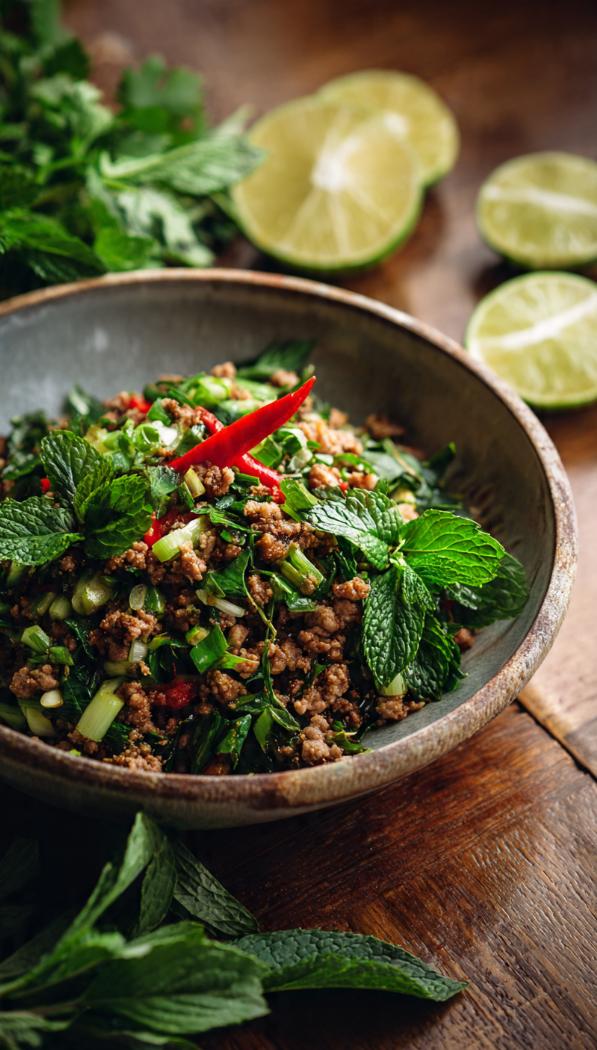
Lao Larb Mo (Minced Pork Larb) — The Upgraded Version
Larb isn't a meat dish with herbs on top. It's an herb salad with meat in it. That's the distinction that changes everything. If your larb is 80% meat and 20% herb, you're making meat sauce, not larb. This version keeps the traditional technique and fixes the ratio, the dressing, and the cooking temperature that most recipes get wrong.
What You Need
- ½ lb ground pork (70/30 fat-to-lean — not the lean stuff)
- 3 tbsp fresh lime juice
- 2 tbsp fish sauce
- 1 tsp roasted rice powder (khao khua)
- 1 tsp palm sugar, melted
- ½ tsp salt
- ½ cup fresh mint leaves, torn
- ½ cup fresh cilantro leaves and tender stems
- ¼ cup green onions, sliced thin on the bias
- 2 bird's eye chilies, finely sliced (adjust to taste)
- 1 shallot, thinly sliced
The Roasted Rice Powder (Khao Khua)
This is the ingredient that makes larb taste like larb. Toast 2 tablespoons of glutinous rice in a dry pan over medium heat for 5–6 minutes, stirring constantly, until deeply golden and nutty. Grind to a fine powder in a mortar or spice grinder. Make extra — it keeps for weeks in a jar. Never skip this.
The Method
- Toast the rice first. Do this before anything else. The pork waits for no one, but the rice powder takes 6 minutes. Do it, set it aside, don't rush.
- Sear the meat. Heat a wok or heavy pan over maximum heat. No oil — the pork renders its own fat. Add the ground pork and break it up immediately with a spatula. Stir-fry 2–3 minutes. Stop when the outside is golden and the inside is still slightly pink — it finishes in the bowl. Overcooked larb meat is gray, crumbly, and sad.
- Make the dressing. Transfer the pork to a bowl while it's still hot. Add lime juice, fish sauce, melted palm sugar, salt, and roasted rice powder. Toss thoroughly — the hot pork fat emulsifies with the lime and fish sauce into a light, creamy dressing that coats every grain of meat.
- Herb toss. Add mint, cilantro, green onions, chilies, and shallots. Toss by hand — the heat from the pork releases the herb aromatics without wilting them. You want the herbs bright and the meat warm, not the other way around.
- Serve immediately. Larb doesn't wait. It's best the second it's assembled — fresh herbs, warm pork, bright dressing. Leftovers are fine but they lose the herb punch within 30 minutes.
The AI Upgrades
The herb-to-meat ratio: Most recipes use ¼ cup herbs for ½ lb meat. This recipe uses ½ cup herbs for ½ lb meat — a 1:1 ratio by volume. That's the Lao standard. You want a forkful that's half herb, half meat. If you're used to American larb (meat-forward), this will feel like a salad. It's supposed to.
Troubleshooting — meat is gray and dry: You cooked it too long. Stop at the pink-center stage. The residual heat in the bowl finishes the cooking without overcooking it. Gray pork means the proteins have tightened up and squeezed out moisture. There's no recovery from that.
Troubleshooting — dressing is too sour or too salty: Taste the dressing before adding herbs. Adjust lime (sour) and fish sauce (salty/umami) at that stage — once the herbs are in, it's harder to adjust. The ideal balance: bright lime that hits the back of your throat, fish sauce that provides depth without tasting like salt, palm sugar barely perceptible as a rounding agent.
Troubleshooting — no crunch: You forgot the roasted rice powder. Or you ground it too fine. Khao khua should be a fine powder but with a slight sandy texture — like coarse cornmeal, not flour. The crunch isn't dramatic but it's essential to the mouthfeel.
Creative twist — the crispy shallot upgrade: Thinly slice 3 shallots. Fry in a little oil over medium-low heat until golden and crisp — about 8 minutes. Drain and salt lightly. Sprinkle over the top just before serving. The crispy shallots add a caramelized sweetness and a crunch that contrasts with the fresh herbs. They're the garnish that makes people ask for the recipe.
The Science Notes
Why hot pork finishes in the bowl: The pork is removed from the wok at around 130–140°F internal temperature — still slightly pink, well below the 160°F USDA safe temperature for ground pork. The carryover heat from the hot pork brings it to 155°F within 3 minutes in the bowl, which is safely cooked while staying juicy. USDA says 160°F for ground pork. In practice, 155°F with carryover is safe enough for most healthy adults. If you're immunocompromised, cook the pork to 160°F in the wok and accept slightly drier meat.
Why lime juice on hot pork: The acid in lime juice partially denatures surface proteins on the pork, creating a tender, slightly cured effect similar to ceviche. This is a chemical reaction — the citric acid disrupts protein bonds. The result is meat that tastes more tender than it is, without any actual tenderization time.
Why roasted rice powder: Toasting glutinous rice to 350°F+ causes Maillard reactions — amino acids and sugars react to create nutty, toasty flavor compounds that raw rice powder doesn't have. Grinding it after toasting preserves those compounds. The sandy texture also provides a contrast to the soft pork and herbs, making each bite feel more varied.
Upgraded with AI assistance — traditional base, elevated intelligence. Always taste as you go.