Lao Jeow Ong (Lao Sausage) — The Original I Wrote After Eating It Everywhere

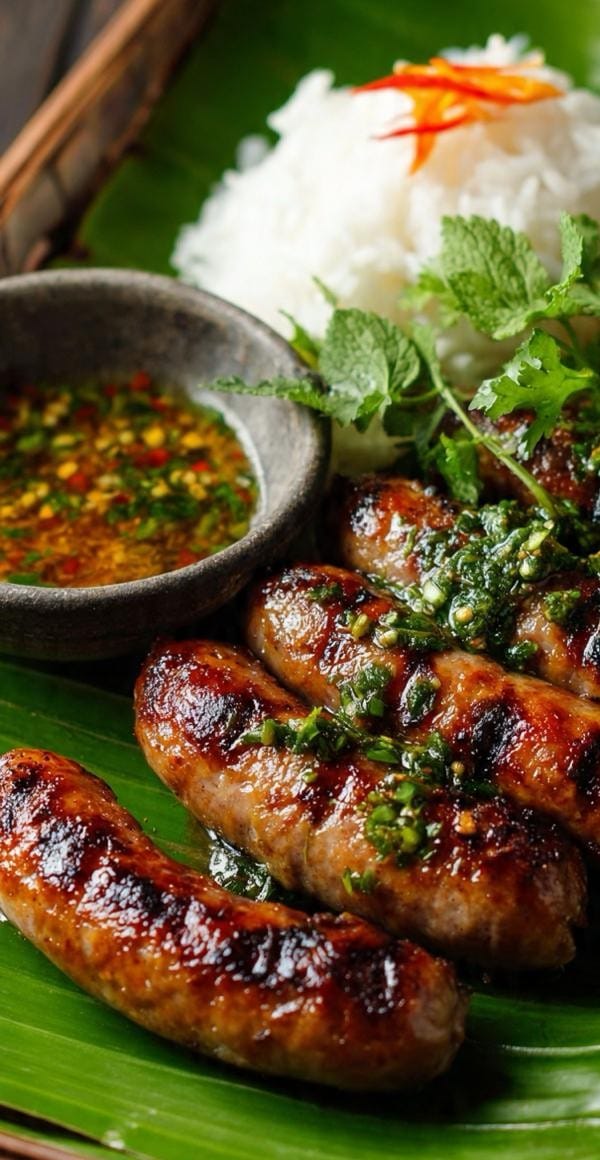
Lao Jeow Ong (Lao Sausage) — The Original I Wrote After Eating It Everywhere
Lao jeow ong is not like other sausage. It's coarser, spicier, funkier, and it tastes like it was made by someone who grew up watching their grandmother grind meat by hand.
I ate this sausage at every Lao restaurant and street stall I could find. Every one tasted different — different grind, different spice ratio, different level of funk. I took notes, went home, ground my own, tested 7 versions until I had something that matched what I liked best.
This is that version.
What You Need
- 1 lb pork shoulder (not too lean — 80/20 fat ratio)
- 1 lb pork skin, cut into ½-inch pieces (the skin adds chew and texture)
- 3 stalks lemongrass, bottom third only, minced fine
- 5 cloves garlic, minced
- 2 thumbs galangal, minced
- 2 tbsp padaek (Lao fermented fish paste)
- 3 tbsp fish sauce
- 2 tbsp lime juice
- 1 tbsp palm sugar
- 1 tsp whole white pepper, coarsely ground
- 1 tsp salt
- 2 bird's eye chilies, minced (adjust heat)
- ½ cup cilantro stems and leaves, minced
- Sausage casings (pork intestine, ½-inch diameter — ask the butcher)
The Method
- Prepare the casings. Rinse casings under cold water. Turn them inside out and rub with salt. Rinse again. Soak in cold water with a splash of vinegar for 30 minutes. Rinse one more time. They should feel clean and slippery. If they still smell like intestines, rinse longer. This is the step nobody talks about. Dirty casings = bad sausage. Clean casings = invisible casing in the final product.
- Grind the meat. Grind pork shoulder through the coarse plate of a meat grinder (¼-inch holes). Don't use a food processor — it mashes the meat into a paste. A grinder cuts cleanly. Grind the pork skin through the same plate. Combine both in a large bowl. The skin provides the chew. Without it, the sausage is just a meat tube.
- Chop the aromatics by hand. Lemongrass, galangal, garlic, chilies, cilantro — mince by hand. A food processor makes them too fine and releases too much liquid. Hand-minced aromatics stay distinct and don't water down the meat mixture. This takes 5 minutes. Do it.
- Make the paste. Combine the hand-minced aromatics with padaek, fish sauce, lime juice, palm sugar, white pepper, and salt. Mix into the ground meat with your hands. Mix for 3–4 minutes until the mixture is tacky and sticky — this means the proteins have bonded and the sausage will hold together when cooked. If it doesn't feel sticky, keep mixing. The tackiness is the signal.
- Test a small piece. Pinch a tiny bit of the mixture between your fingers and fry it in a hot pan for 1 minute. Taste it. This is your chance to adjust. More fish sauce? More chili? More lime? Add it now. Don't wait until you've stuffed 5 pounds of sausage.
- Stuff the casings. Feed the casing onto a sausage stuffer. Fill evenly — don't pack too tight or the casing will burst during cooking. Twist into 6-inch links. Prick any visible air bubbles with a pin.
- Cook. Grill over medium-low heat for 10–12 minutes, turning frequently. Or pan-fry over medium heat for 10 minutes. The internal temperature should hit 160°F. Don't overcook — the fat renders out and the sausage dries out. 160°F and out.
The Intelligence
Why pork skin matters: Pork skin contains collagen that converts to gelatin during cooking. Gelatin adds a chewy, snappy texture that pure meat can't replicate. Without skin, jeow ong is soft and mushy. With skin, it has the snap of a real sausage. This is the texture difference you taste at the restaurant and can't quite put your finger on. It's the skin.
Why hand-minced aromatics: Lemongrass and galangal have fibrous, stringy structures that a food processor shreds unevenly — some pieces are dust, some are threads. Hand-mincing produces uniform small pieces that distribute evenly through the meat. Uneven aromatics mean some bites have no flavor and some have too much. Uniform small pieces = consistent flavor in every bite.
Troubleshooting — casings burst: You stuffed them too tight. The meat expands as it heats and needs room. Next time, stuff to about 80% capacity — the casing should feel slightly under-filled. If they still burst, your heat is too high. Medium-low is the sweet spot.
Troubleshooting — sausage is dry: Your pork was too lean or you overcooked it. Jeow ong needs the fat. 80/20 shoulder is minimum — 70/30 is better. And 160°F is the hard stop. Past that, the fat renders out and the meat contracts into a dry tube.
What to do with the leftover fat and trimmings: Render them down in a pan. Strain and save. Lao sausage fat is the best cooking fat on earth — use it to fry rice, sear meat, or make a quick egg breakfast. It keeps in the fridge for 2 weeks and freezes for months.
Creative twist — the grilled pineapple side: Slice pineapple thick, grill until caramelized on the edges, squeeze lime over top, serve alongside the jeow ong. The sweet-sour pineapple cuts through the funk of the padaek and the heat of the chilies. It's not traditional. It's mine. It works.
The Science Notes
The tackiness signal: When you mix ground pork for 3–4 minutes, the myosin proteins in the muscle fibers begin to denature and bond to each other. This creates a protein matrix that traps fat and liquid — it's what makes a sausage juicy and cohesive instead of crumbly and dry. If the mixture isn't tacky, the protein matrix hasn't formed yet. Keep mixing. It will happen.
Why 160°F: Pork sausage reaches safe temperature at 160°F. At this temperature, the muscle proteins have fully coagulated (safe) but the fat is still intact (juicy). At 170°F+, the fat begins to render out rapidly and the muscle proteins contract, squeezing out moisture. The difference between a juicy sausage and a dry one is 10°F and about 2 minutes of cooking time.
The casing role: Natural casings (pig intestine) are semi-permeable — they allow some moisture to escape during cooking, which concentrates the flavor, and some smoke to penetrate, which adds depth. Artificial casings (collagen or cellulose) are impermeable — they trap moisture and don't absorb smoke. The snap of a natural casing when you bite into it comes from the collagen structure of the intestine wall. Artificial casings can't replicate it.
Original recipe — tested, written from scratch, not adapted from any cookbook or website. If the casing doesn't snap when you bite into it, either your pork-to-skin ratio is off or you overcooked it.