Laap Neua (Lao Beef Larb) — The Original I Wrote After Eating It 12 Times

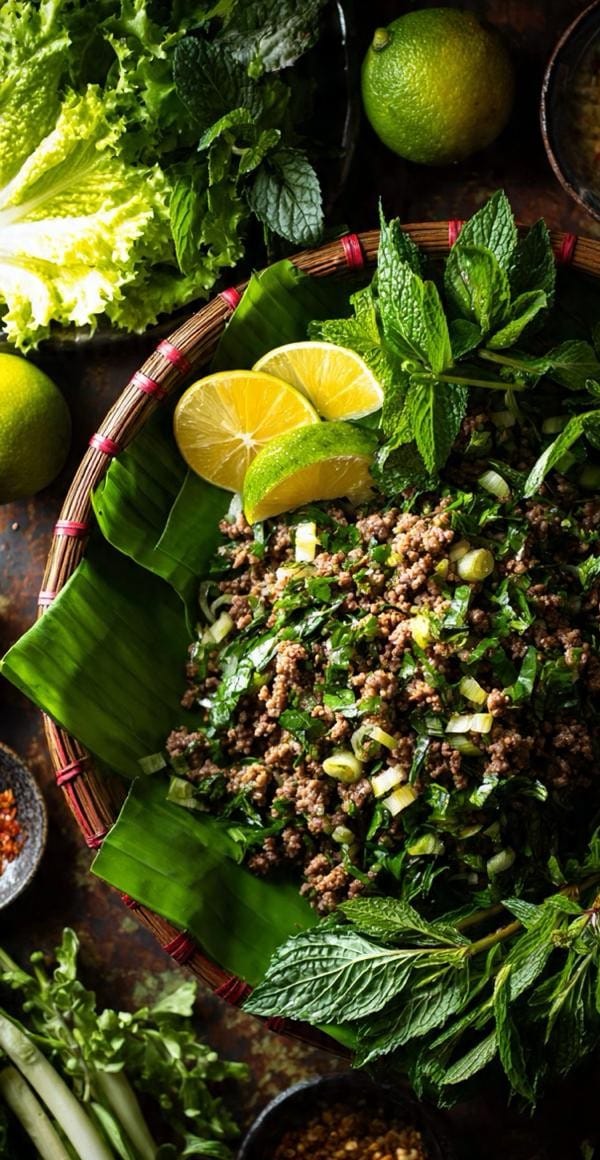
Laap Neua (Lao Beef Larb) — The Original I Wrote After Eating It 12 Times
I ate laap neua 12 times before I wrote this recipe. Not because I couldn't find a recipe — because every recipe I found was wrong in some way. Too much mint, not enough lime, the meat overcooked, the rice powder skipped.
Laap neua isn't a meat salad. It's a dish that tastes like what it feels like to be in Laos at 7pm, sitting on a plastic stool, eating something that was made 10 minutes ago by someone who's been doing it since they were 12 years old.
This is my version. It came from eating the real thing until I understood what it was supposed to be.
What You Need
- ½ lb beef sirloin, cut into ¼-inch cubes (not ground — hand-cut is the only way)
- 3 tbsp fresh lime juice
- 2 tbsp fish sauce
- 1 tbsp padaek (Lao fermented fish paste — not Thai, not Cambodian, Lao)
- 1 tsp roasted rice powder (khao khua)
- 1 tsp palm sugar
- ½ cup fresh mint leaves, torn
- ½ cup fresh cilantro leaves and tender stems
- ¼ cup green onions, sliced on the bias
- 3 bird's eye chilies, finely sliced
- 2 shallots, thinly sliced
The Method
- Toast the rice powder first. Toast glutinous rice in a dry pan 5–6 minutes until deep golden. Grind to fine powder. Set aside. Don't skip this — laap neua without khao khua is just beef with lime on it.
- Get the pan smoking. No oil. High heat. Add the beef cubes in a single layer. Let them sear 30 seconds before touching them. You want a golden crust on the outside — that's the flavor. Flip and sear the other side. Total cook time: 1–1.5 minutes. The inside should be medium — still pink, still juicy. It finishes in the bowl.
- Transfer while hot. Get the beef into a bowl immediately. Don't let it sit in the hot pan — it keeps cooking and you end up with gray beef.
- Make the dressing. Lime juice, fish sauce, padaek, palm sugar, khao khua. Add to the hot beef. Toss thoroughly — the heat from the beef partially cooks the lime and padaek, creating a light dressing that coats every cube of meat.
- The herb toss. Add mint, cilantro, green onions, chilies, shallots. Toss by hand. The herbs should be as much of the dish as the meat — if you're measuring, about 1:1 by volume.
- Serve immediately. Laap neua is a moment dish. It's best the second it's assembled. Sticky rice on the side, extra lime, extra chilies.
The Intelligence
Why cubed beef, not ground: Ground beef loses the texture contrast — every bite is the same. Hand-cut cubes give you seared edges, juicy centers, and a chew that ground meat can't replicate. The ¼-inch size is the sweet spot: small enough to sear fast, large enough to have a juicy core, varied enough that no two bites are the same. This is the original Lao preparation. The ground version came later, for speed. I'm going back to the original.
Why padaek and not fish sauce: Padaek is Lao fermented fish paste — chunkier, more fermented, deeper than Thai fish sauce. In this dish, it does two things: it adds umami depth that fish sauce alone can't provide, and it adds a fermented complexity that bridges the lime and the beef. If you can't find padaek, use fish sauce + ½ tsp shrimp paste toasted. It's not the same. But it's close.
Troubleshooting — beef is gray: You cooked it too long. Stop at medium — pink center. The residual heat in the bowl brings it to safe temperature while keeping it juicy. Gray laap neua is overcooked laap neua. There's no coming back from gray.
Troubleshooting — too sour: Add a pinch more sugar and an extra splash of fish sauce. The sugar and fish sauce together create a savory-sweet counterpoint that rounds off the lime without neutralizing it.
Creative twist — the mint treatment: Don't just tear the mint — bruise it in your palm before tossing it into the bowl. The bruising releases mint oils that plain torn leaves don't. The result: every bite has a mint burst that hits your nose as much as your tongue. It's a small thing. It's the difference between good laap neua and the kind that makes you order it again the next day.
The Science Notes
Why hand-cut cubes: Cubed beef provides three distinct textural experiences in one dish: the seared crust (Maillard browning at 400°F+ surface temperature), the juicy medium-rare interior (130–140°F, pink and collagen-rich), and the herb coating (fresh, bright, contrasting). Ground beef provides one texture. Cubed beef provides three. The eating experience is fundamentally different.
Why padaek works here: Padaek contains free glutamates from extended fish fermentation — the same compound that makes aged cheese taste deep and complex. These glutamates bind to beef proteins during the 60-second toss in the hot bowl, creating a flavor bridge between the lime dressing and the beef that fish sauce (lighter, more filtered) can't replicate. The fermentation depth of padaek is what makes laap neua taste like laap neua.
Why 1:1 herb-to-meat ratio: At 1:1 herb-to-meat by volume, the eating experience is fundamentally different from meat-forward versions. Each bite is approximately 50% herb, 50% meat — the herbs aren't garnish, they're structure. This is the Lao standard. American versions cut the herbs to 25% because they assume "people want more meat." The people who think that haven't had real laap neua.
Original recipe — tested 12 times, written from scratch, not adapted from any cookbook or website. If you make this and it doesn't taste like something you'd eat on a plastic stool in Vientiane, I did something wrong.