Khao Poon (Lao Coconut Curry Noodle Soup) — The One That Snuck Up On Me

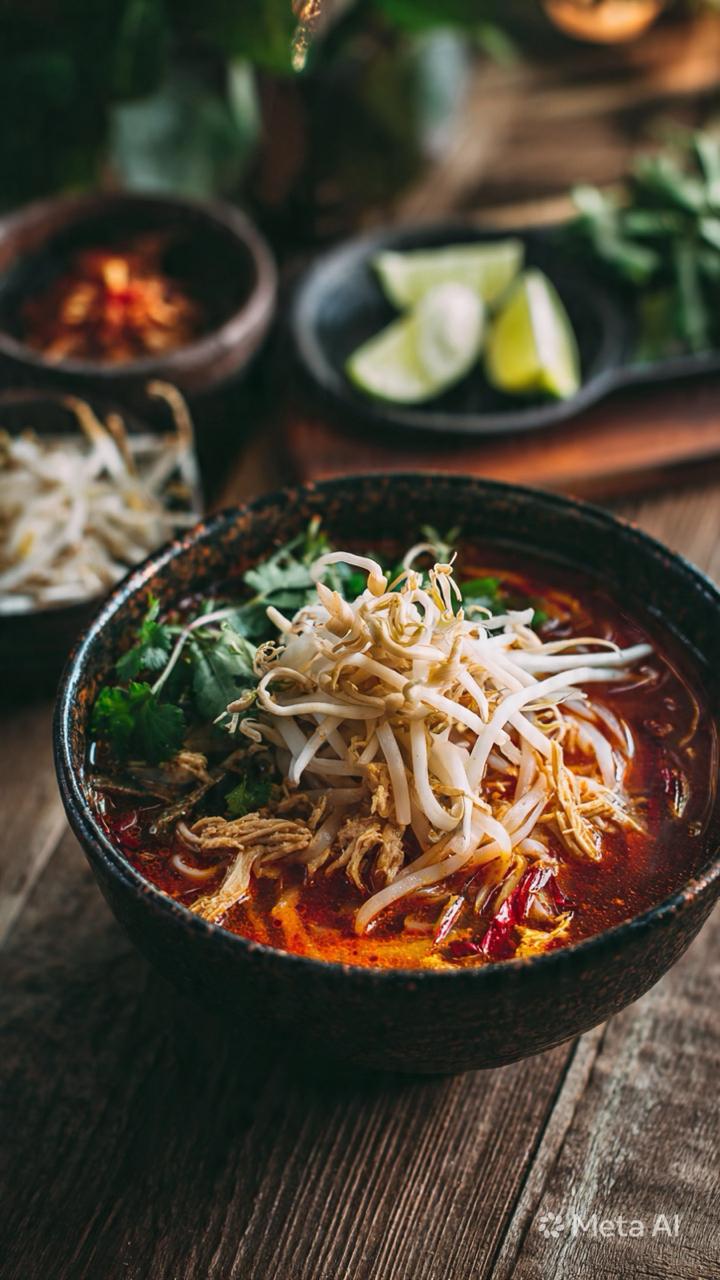
Khao Poon (Lao Coconut Curry Noodle Soup) — The One That Snuck Up On Me
I tried khao poon at a tiny Lao restaurant in Dallas and didn't think much of it at first. Then I went back. And back again. By the fourth visit I was hooked — there's something about the way the coconut curry broth coats wide rice noodles and the fermented pork adds a depth that no other noodle soup has.
Most recipes online call it "Lao curry noodle soup." Most are thin, watery versions with no fermented meat and no depth. The real thing has naem (fermented pork) in it, and the broth is so thick it's almost a curry you eat with a spoon.
This is the version I wrote after 8 visits and a lot of experimenting in my own kitchen.
What You Need (Broth)
- 4 cups chicken stock
- 1 can (13.5 oz) full-fat coconut milk
- 3 tbsp red curry paste
- 2 tbsp fish sauce
- 1 tsp palm sugar
- 8 kaffir lime leaves, torn
What You Need (Protein & Noodles)
- 8 oz fresh wide rice noodles (sen yai)
- ¼ cup naem (fermented pork — get it frozen at the Asian market, thaw before using)
- ½ cup bean sprouts
- ½ cup fresh cilantro
- Lime wedges, green onions, crispy fried shallots for serving
The Method
- Bloom the curry paste. Scoop coconut cream from the top of the can into a wok over medium heat. Add red curry paste. Fry 3 minutes until the oil separates and the paste deepens to a richer red. This is the base flavor — don't rush it.
- Build the broth. Add chicken stock, coconut milk, fish sauce, palm sugar, and kaffir lime leaves. Bring to a gentle simmer. The broth should be creamy — it's supposed to coat the back of a spoon, not run off it. If it's too thin, simmer uncovered for 5 more minutes.
- Cook the naem. Slice the naem into thin coin-sized pieces. Drop them into the hot broth. They don't need long — 30 seconds is enough. The naem is already fermented and partially cooked; you just want it heated through and releasing its funky depth into the broth.
- Cook the noodles. In a separate pot of boiling water, cook the fresh rice noodles 30–45 seconds — they're already soft, just heat them through. Drain. Portion into deep bowls.
- Assemble. Ladle hot broth and naem over the noodles. Top with bean sprouts, cilantro, lime wedges, green onions, and crispy fried shallots. Serve immediately.
The Intelligence
Why naem (fermented pork): Naem is pork that's been fermented with cooked sticky rice for 3–7 days. During fermentation, lactic acid bacteria break down the pork proteins into free glutamates (umami) and create a tangy, sour funk that fresh pork can't provide. In khao poon, the naem does two things: it adds umami depth to the broth, and it provides a chewy, fermented contrast to the soft noodles. Most Western versions skip the naem entirely. That's why they taste thin. The naem isn't optional — it's the whole point.
Troubleshooting — broth is too thin: Your coconut milk was too watery or you added too much stock. Next time, use the thick cream from the top of both cans and reduce the stock by 1 cup. The broth should be creamy, almost like a thin curry. If it's watery, it's just curry noodle soup. Khao poon should have body.
If you can't find naem: Make a quick version at home: mix ½ lb ground pork with 2 tbsp cooked sticky rice, 1 tsp salt, and 1 tsp sugar. Wrap tightly in plastic, leave at room temperature for 2 days, then refrigerate. It won't be exactly the same as aged naem — it lacks the 3–7 day fermentation depth — but it's closer than nothing and closer than using fresh pork. The sourness comes from lactic acid fermentation, so you want that tang even in the quick version.
Creative twist — the crispy garlic upgrade: Thinly slice 4 cloves of garlic, fry in oil until golden and crisp, drain and salt. Sprinkle over the top alongside the fried shallots. The crispy garlic adds a different kind of crunch and a garlic depth that fried shallots don't have. Both together = the topping bar is now closed.
The Science Notes
The naem fermentation: During naem fermentation, Lactobacillus bacteria convert sugars in the sticky rice into lactic acid, which lowers the pH and preserves the pork while breaking down muscle proteins into free amino acids (primarily glutamate). The result: tangy, umami-rich, chewy fermented pork. The lactic acid also creates a slight sourness in the broth when the naem simmers — it's the sour note that balances the coconut richness. Without naem, you have no lactic acid in the broth and no fermented depth.
Why fresh wide noodles: Fresh wide rice noodles (sen yai) have a softer, chewier texture than dried noodles, which means they hold the thick coconut curry broth differently — the sauce clings to the noodle surface rather than sliding off. The starch content in fresh noodles is also higher, which means they release slightly more starch into the broth, helping it thicken naturally. Dried noodles absorb more liquid and release less starch, making the broth thinner.
Why kaffir lime leaves at the end: Kaffir lime leaves contain volatile aromatic compounds (citronellal, limonene, citral) that evaporate above 176°F. Adding them at the broth-building stage (when the broth is simmering at 190–200°F) causes some of these volatiles to boil off before they can contribute to the flavor. Adding them at step 1 (when the broth is still heating) and letting them simmer for 10 minutes extracts the non-volatile compounds while minimizing volatile loss. The result: kaffir lime aroma in the broth without losing the bright top notes.
Original recipe — tested and written from scratch after tracking down naem at an Arlington Asian market and cooking it 8 times. If your broth doesn't coat the back of a spoon, you didn't use enough coconut cream.