Indonesian Nasi Goreng — The Upgraded Version

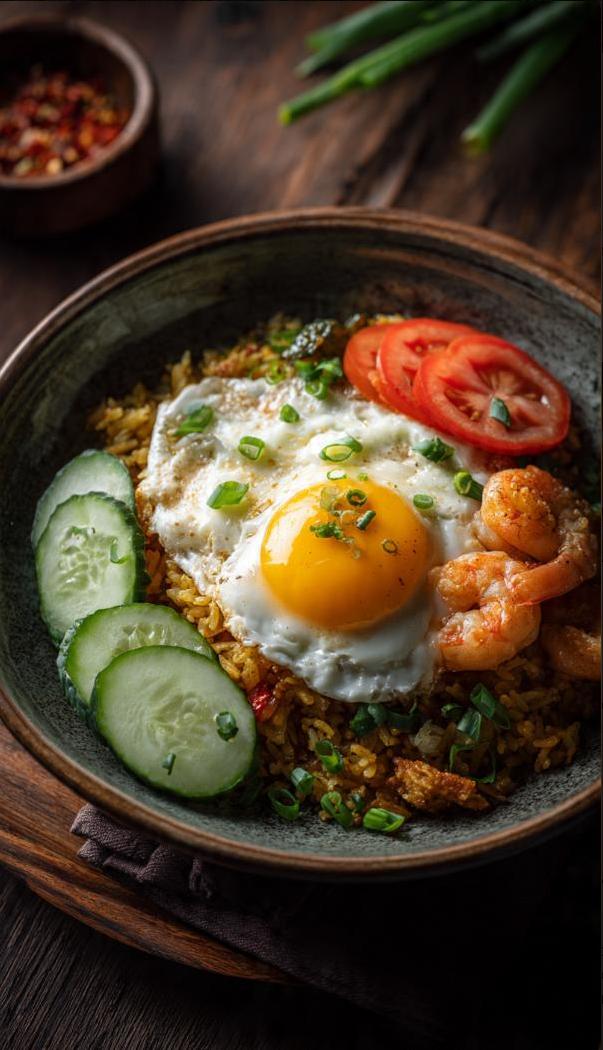
Indonesian Nasi Goreng — The Upgraded Version
Nasi goreng isn't just fried rice. It's Indonesia's national dish, and every cook has their version. The difference between "fried rice" and nasi goreng is in the sauce — the sweet soy (kecap manis), the belachan, the garlic intensity, and the fact that the rice should be fried hard enough to develop a slight crust without being burnt.
What You Need
- 4 cups cold cooked jasmine rice (day-old, refrigerated — fresh rice is too wet)
- ½ lb chicken thigh, diced small
- 4 cloves garlic, minced
- 4 shallots, thinly sliced
- 2 bird's eye chilies, sliced (optional)
- 2 tbsp kecap manis (Indonesian sweet soy sauce — this is the secret)
- 1 tbsp regular soy sauce
- 1 tsp shrimp paste (terasi or belachan, optional but authentic)
- 2 eggs, beaten
- 2 tbsp neutral oil
- 4 green onions, sliced
- Fried shallots (bawang goreng) for garnish
- Lime wedges, cucumber, pickled vegetables for serving
The Method
- Cold rice is mandatory. Freshly cooked rice is too moist — it steams instead of fries, and you get sticky clumps instead of distinct grains. Day-old rice from the fridge has dried out and separated into individual grains. If you're making this today, cook the rice and spread it on a baking sheet to cool completely before refrigerating for 2 hours minimum.
- Break the rice. Before anything else, break up the cold rice with your hands. Every clump must be separated into individual grains. This takes 2 minutes and it's the difference between nasi goreng and rice pudding.
- Toast the belachan. If using shrimp paste, toast a ½-inch piece in a dry pan over medium heat for 1 minute until fragrant. It should smell oceanic and savory, not like raw seafood. Crumble and set aside. This is the umami bomb that kecap manis alone can't provide.
- Fry the aromatics. Heat oil in a wok over medium-high heat. Add shallots and fry 1 minute until golden. Add garlic and chilies — 30 seconds. Don't let the garlic burn; burnt garlic = bitter nasi goreng.
- Sear the chicken. Add diced chicken. Stir-fry 3–4 minutes until golden on the outside and just cooked through.
- The egg scramble. Push chicken to the side. Pour beaten egg into the empty space. Scramble until just set — soft curds, not a dry omelet. Fold together with the chicken.
- Rice in. Add the broken rice across the entire wok surface. Stir-fry 3–4 minutes on medium-high heat. The rice should heat through, the grains should separate, and the bottom should start to develop a slight crust. This crust is the signature of good nasi goreng — it comes from the rice frying directly on hot metal for several minutes.
- Sauce. Add kecap manis and soy sauce. Add toasted belachan if using. Toss aggressively for 2 minutes. Every grain should be evenly coated. The kecap manis will caramelize on the hot rice, creating a sweet-savory glaze.
- Finish. Toss in green onions. Plate immediately. Top with fried shallots. Serve with lime, cucumber, and pickled vegetables on the side.
The AI Upgrades
Why day-old rice: Fresh rice has a moisture content of about 65–70%. Refrigerated rice drops to about 55–60% as moisture evaporates. At 60% moisture, the grains separate cleanly and fry without steaming. At 70% moisture, the grains stick together and the wok temperature drops below the threshold for browning. Cold, dried rice = individual grains with crust. Fresh rice = sticky clumps.
Troubleshooting — rice is sticky: Your rice was too fresh or too moist. Fix: spread cooked rice on a baking sheet, refrigerate uncovered for 2 hours before using. If it's already sticky in the wok, keep frying — the moisture will eventually evaporate and the grains will separate. It just takes longer.
Troubleshooting — too sweet: Kecap manis is sweeter than it tastes when raw. It caramelizes during frying and the sweetness intensifies. Next time, start with 1.5 tbsp instead of 2. Adjust up if it needs it. You can always add more, you can't take it away.
Kecap manis substitution: Regular kecap (Indonesian soy sauce) + 1 tbsp of brown sugar, simmered for 2 minutes. It's not the same — kecap manis has a molasses-like depth from palm sugar that regular kecap + brown sugar can't quite replicate — but it's passable in a pinch.
Creative twist — the pineapple upgrade: Add ½ cup of diced fresh pineapple at step 7 (with the rice). The pineapple sweetness is different from kecap manis — it's brighter, fruitier, and cuts through the savory depth. It also adds small bursts of acid that make each bite more interesting. Don't tell anyone it's in there and watch people try to figure out what's different.
What to do with leftover rice: Nasi goreng is literally designed for leftover rice. That's what makes it a weeknight hero. Keep a container of cooked rice in the fridge specifically for nasi goreng. When you have leftover chicken or shrimp or vegetables, throw them in. Nasi goreng absorbs everything.
The Science Notes
The crust mechanism: Direct contact between rice grains and hot metal (350°F+) at the bottom of the wok causes Maillard browning — amino acids and reducing sugars react to create the savory, nutty, slightly bitter crust that distinguishes fried rice from boiled rice that's been moved around a pan. A 3–4 minute fry at medium-high creates this crust. A 1-minute fry at low heat doesn't.
Why hand-breaking the rice: A spatula can't separate grains that have stuck together in the fridge. Fingers can. Breaking the rice by hand before cooking ensures that every grain has maximum surface area for sauce absorption and maximum contact with the hot wok for browning. It takes 2 minutes and makes an enormous difference.
Why belachan (shrimp paste): Shrimp paste is a fermented shrimp product that's rich in glutamic acid — the same compound that makes MSG taste like umami. When toasted, it develops additional savory depth. Kecap manis provides sweet-savory, but belachan provides deep-sea umami that soy products can't replicate. It's the secret ingredient that makes restaurant nasi goreng taste more than the sum of its parts.
Upgraded with AI assistance — traditional base, elevated intelligence. Always taste as you go.