How to Interview an Aunty (Before You Go to Southeast Asia)

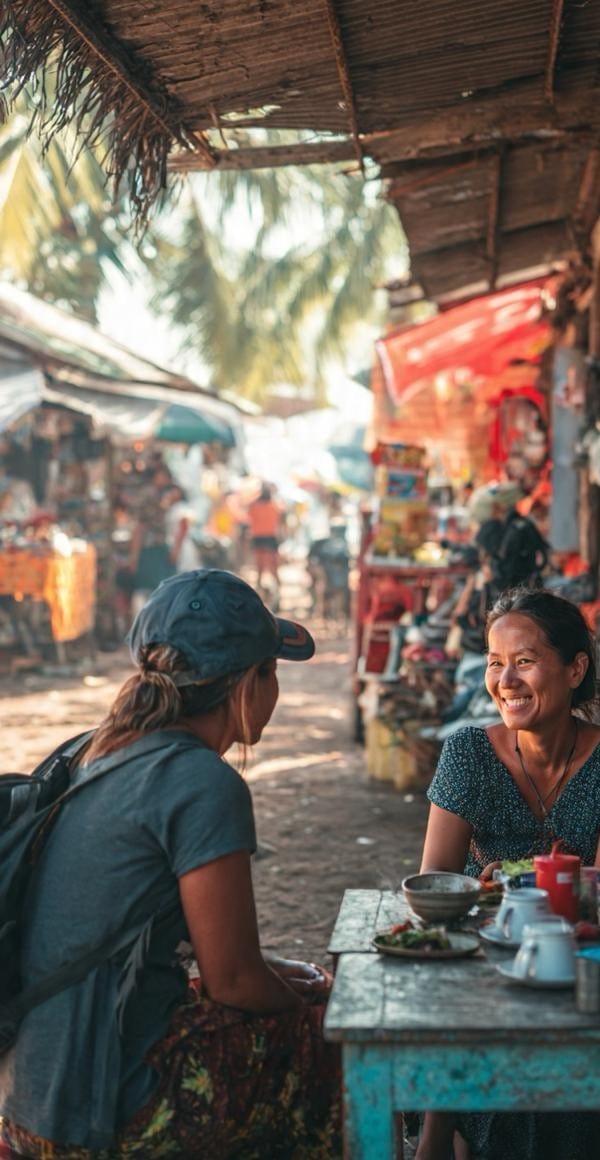
How to Interview an Aunty (Before You Go to Southeast Asia)
Most food writers interview chefs. I want to interview Aunties.
Chefs talk technique. Aunties talk life. Chefs measure. Aunties feel. Chefs write cookbooks. Aunties feed families.
When I go to Southeast Asia, I'm not visiting restaurants. I'm finding Aunties — the women who've been cooking the same dishes for 40+ years, who learned from their mothers and aunts before them, who don't measure anything and still get it right every single time.
This is how I plan to approach them. And if you ever find yourself in a similar position, here's what I've learned about asking the right questions.
Where to Find Them
- Street food stalls at 5am — the ones with the oldest-looking aunties running them
- Family restaurants where the owner is clearly the matriarch
- Temple food stalls on weekends — the aunties who cook for the community
- Home kitchens — if you can get invited, go. The real food is always at home
- Village markets, not the tourist markets — where the locals actually shop
The Interview Questions
These are the questions I'm taking with me. They're designed to get answers no recipe book contains.
Not "what's in this dish?" — she knows what's in it. She doesn't write it down because it's not interesting to her.
Not "how long do you cook it?" — she'll say "until it's done" and she's right.
Ask these instead:
- "How did you learn this?" — Every answer is a story. From her mother? From her aunt? From a neighbor who showed her one afternoon when she was 12? The learning story is the inheritance story. That's the part that matters.
- "What's the one thing most people get wrong?" — This is the secret question. Aunties know exactly what tourists and restaurants and recipe books get wrong. They'll tell you. And it's usually one small thing — the type of fish sauce, the amount of lime, the way you fold the banana leaf — that makes the whole difference.
- "What did your mother do differently?" — This opens the door to family technique. Her mother might have used a different type of chili, or cooked it longer, or added something that nobody else uses. The variations between generations are where the real insight lives.
- "When do you make this?" — The answer tells you the context. Do they make it for family gatherings? For special occasions? When someone's sick? For a quick weekday lunch? The context reveals the importance of the dish in ways the recipe never will.
- "What ingredient can you not substitute?" — Most dishes have one ingredient that absolutely cannot be replaced. The Aunty knows which one it is. If you ask "what's the secret ingredient?" she might say "love" or "patience." But ask "what can you not substitute?" and she'll tell you the actual answer — the specific fish sauce brand, the specific type of chili, the banana leaf that only grows in one region.
- "Show me your hands." — Sometimes the best answer isn't a sentence. It's watching her hands. How she holds the pestle. How she folds the banana leaf. How she checks if the fish is done without a thermometer. Watch first. Ask questions after.
The Rules
- Bring something first. Don't show up empty-handed. Fruit. Flowers. Something from the market. You're not a tourist taking photos — you're a guest who came to learn. The exchange changes the energy entirely.
- Use a translator who's also a food person. A generic translator misses the nuance. You need someone who understands food, who knows the terms, who can translate "medium heat" not just as words but as the gesture and the timing.
- Let her cook. Don't try to take notes while she's cooking. Watch first. Ask questions while she cooks. The cooking is part of the interview — her hands are talking while her mouth is talking.
- Go back. One visit is never enough. The first visit is polite. The second visit is real. By the third visit, she's showing you things she wouldn't show a stranger — her shortcuts, her secrets, the "family only" technique.
- Respect the answer "I don't know." — If she doesn't know why something works, she doesn't know. Aunties don't invent explanations. They just know. "I don't know" is the most honest answer you'll get. Respect it.
The Output
Every interview becomes three things:
- The recipe — what she makes, how she makes it, the ingredients, the timing
- The story — how she learned it, what it means to her, the context
- The secret — the one thing no recipe book contains
That's the post. That's the archive. That's the legacy.
The Aunties don't write cookbooks. That's why this matters. When they're gone, the knowledge goes with them — unless someone took the time to listen.
That's why I'm going. That's what I want to bring back.
This post is the first in the Aunty Interview series — documentation and preparation for the Southeast Asia trip. The first actual interview post will come from the first Aunty I sit down with. Until then, this is the framework.