Filipino Chicken Adobo — The Upgraded Version

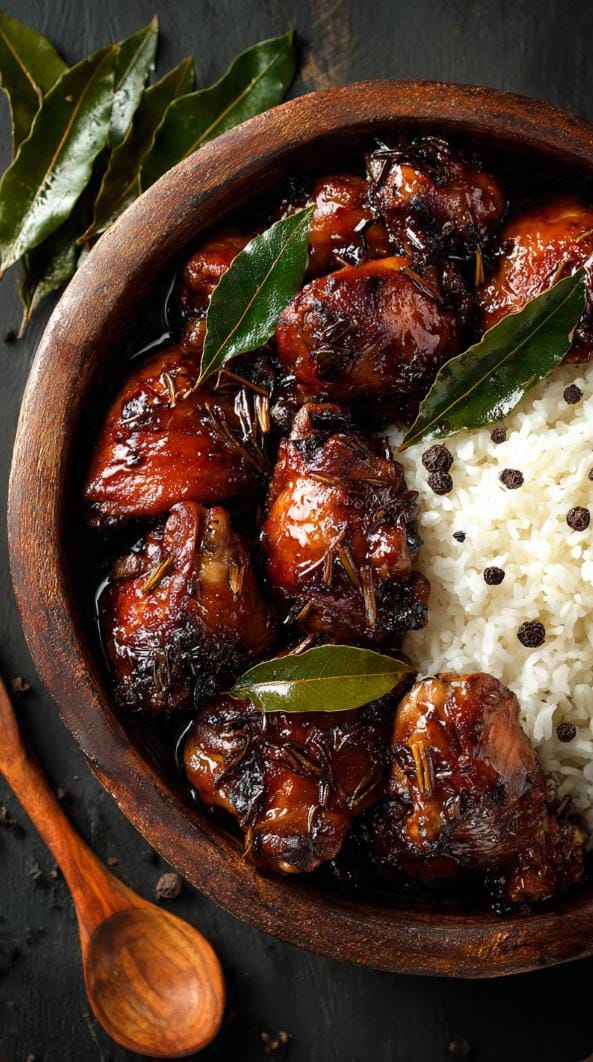
Filipino Chicken Adobo — The Upgraded Version
Adobo is the dish that defines Filipino cooking — vinegar, soy sauce, garlic, bay leaves, and a long simmer that turns tough cuts tender. This version keeps the no-rinse philosophy (seriously, don't rinse the chicken) and adds the intelligence that makes the difference between "it's fine" and "I could eat this every day."
What You Need
- 3 lbs chicken thighs, bone-in and skin-on (breasts are a crime against adobo)
- ½ cup soy sauce (Silver Swan or patis, not the low-sodium kind)
- ½ cup cane vinegar (sukang iloko — distilled white vinegar works but lacks depth)
- ½ cup water
- 1 head garlic, cloves peeled and smashed (yes, that much)
- 4 bay leaves
- 1 tsp whole black peppercorns, crushed
- 2 tbsp neutral oil
- 1 tbsp sugar (optional — balances the acid)
The Method
- Marinate first. Combine soy sauce, vinegar, water, garlic, bay leaves, peppercorns, and sugar in a bowl. Add chicken, turning to coat. Marinate minimum 1 hour, preferably 4–6 hours or overnight. The vinegar tenderizes the meat while the soy penetrates. This step cannot be rushed.
- No rinse. Take the chicken out of the marinade and put it directly into the pot. Do not rinse it. Do not pat it dry. The marinade is the soul of adobo. If you rinse it, you're making boiled chicken with soy sauce on the side.
- Brown the chicken. Heat oil in a heavy-bottomed pot over medium-high heat. Working in batches so you don't crowd the pan, brown the chicken skin-side down first — 4–5 minutes until golden and crispy. Flip and brown the other side 3 minutes. Don't cook it through — just get the crust. Transfer browned pieces to a plate.
- Build the sauce. Pour the entire marinade (every drop) into the hot pot. Bring to a rolling boil for 2 minutes — this cooks off the raw vinegar edge and reduces the liquid by about a third. The sauce should smell sharp but not biting.
- Simmer. Return the chicken to the pot, skin-side up. Add any accumulated juices from the plate. Bring back to a simmer, then reduce to low. Cover and cook 30–40 minutes. Turn the chicken once halfway through.
- The reduction. Uncover and increase heat to medium. Cook 5–10 minutes until the sauce thickens into a glossy glaze that coats the back of a spoon. This is the sauce that sticks to everything — rice, fingers, the sides of the bowl. Don't rush the reduction.
- Rest. Let it sit 10 minutes off heat before serving. The sauce thickens further as it cools and the flavors meld.
The AI Upgrades
Why thighs over breasts: Chicken breast is 2% fat and dries out at 165°F. Chicken thigh is 15% fat and stays juicy at 175°F. Adobo is a long-simmer dish — thighs survive 40+ minutes of simmering without turning into shoe leather. Breasts turn into dry protein pellets. There is no substitution here.
Troubleshooting — too sour: Add 1–2 teaspoons of sugar. Not enough to sweeten it — just enough to round off the vinegar edge. Taste after each addition. The balance should be: you taste soy first, then vinegar, then garlic, with sweetness barely detectable as an undertone.
Troubleshooting — too salty: Add ¼ cup water and simmer uncovered for 5 more minutes to reduce back to the right consistency. Don't dilute it with more vinegar — that fixes salt but throws off the acid balance.
Troubleshooting — sauce won't thicken: Your heat is too low during the reduction phase. Crank it to medium and let it bubble. The sauce reduces by evaporation — more heat = faster reduction = thicker glaze. If it's still watery after 10 minutes of active bubbling, remove the chicken and boil the sauce alone until it coats a spoon.
Weeknight hack (45 minutes total): Skip the marinade. Combine everything in a pot, bring to a boil, then simmer 25 minutes. It won't have the same depth as the marinated version — the soy and vinegar haven't penetrated the meat — but it's a respectable adobo on a weeknight. The upgrade for this hack: score the chicken thighs deeply on the skin side before cooking. The scoring creates more surface area for the sauce to penetrate in the shortened time.
Creative twist — the crispy skin finish: After the reduction, transfer chicken to a baking sheet and broil for 2–3 minutes until the skin crisps up. The glaze on the skin caramelizes into something crunchy and sticky. Serve over rice with the pan sauce drizzled over top. It's adobo with texture contrast, and it changes everything.
The Science Notes
Why cane vinegar over white vinegar: Cane vinegar (sukang iloko) is made from fermented sugarcane and has a mellow, slightly sweet depth. White vinegar is made from grain alcohol and is harsh and one-note. The difference is immediately apparent in the finished sauce — cane vinegar rounds out, white vinegar bites.
Why no rinse: The soy-vinegar-garlic marinade has already begun denaturing the surface proteins of the chicken. Rinsing removes those dissolved flavor compounds and resets the surface to raw chicken. You lose the head start you paid for with the marinade time.
The reduction science: Uncovering the pot increases evaporation rate by exposing the liquid surface area to air. The sauce thickens not by magic but by water leaving. A glossy coating consistency (nappe) happens at roughly 60–65% of the original liquid volume. If you start with 2 cups of sauce, you want 1.2–1.3 cups at the end.
Upgraded with AI assistance — traditional base, elevated intelligence. Always taste as you go.