The Aunty Who Adds Palm Sugar Syrup to Her Pad Thai — And She's Right

The Aunty Who Adds Palm Sugar Syrup to Her Pad Thai — And She's Right
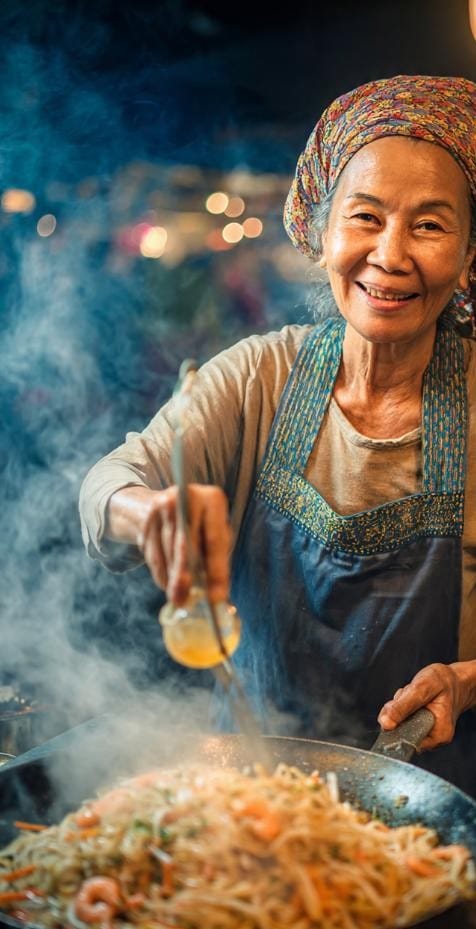
I watched a Thai Aunty in Dallas make pad Thai for a family gathering. She did something no recipe book mentions: she made a palm sugar syrup first, mixed it into the tamarind, and poured it all at once instead of adding sugar separately.
The result was a pad Thai that tasted like caramel had wrapped around every noodle. Not sweet — just richer, deeper, like the tamarind and the sugar had become one flavor instead of two fighting each other.
She's been making it that way for 35 years. She doesn't know why it works. She just knows it does.
Here's her method, with the science of why her upgrade is better.
What You Need
- 8 oz wide rice noodles (sen lek)
- ½ lb chicken thigh, diced
- 3 cloves garlic, minced
- 2 eggs, beaten
- 3 tbsp tamarind paste
- 1½ tbsp palm sugar (the Aunty uses 2 tbsp — she likes it richer)
- 2 tbsp fish sauce
- ½ tsp salt
- 3 tbsp crushed peanuts
- 2 tbsp bean sprouts
- 2 green onions, sliced
- 2 tbsp neutral oil
The Aunty's Method
- The Aunty's first step — make the syrup. Put palm sugar in a small pan over low heat. Add 2 tablespoons of water. Stir gently until the sugar dissolves into a thin, golden syrup — about 2 minutes. Don't let it boil or it'll crystallize. This is her upgrade. She doesn't add raw sugar to the wok — she caramelizes it first, turning it into a syrup that distributes evenly instead of leaving gritty sugar crystals in the noodles.
- Soak the noodles. Warm water, 8–10 minutes, pliable but firm in center. Drain completely.
- Mise en place. Combine tamarind paste, fish sauce, salt, and the palm sugar syrup in a small bowl. Stir until the tamarind and syrup are one uniform sauce — no separate sugar crystals, no separate tamarind blobs. This is the Aunty's second upgrade: the sauce is pre-mixed into a single liquid that coats the noodles uniformly.
- Wok at maximum heat. Oil shimmering. Garlic in — 10 seconds sizzle. Chicken in — 2 minutes, golden outside. Push to side.
- Egg in the center. Pour egg into empty wok space. Scramble 30 seconds, fold with chicken.
- Noodles and sauce together. Toss noodles across the entire wok. Pour the pre-mixed sauce over everything in one motion. Toss aggressively 60 seconds.
- Bean sprouts and scallions. Fold in. 30 seconds. They stay crunchy.
- Plate with crushed peanuts on top. The Aunty puts extra peanuts. "More peanuts = more happiness," she says.
The Intelligence
The Aunty's upgrade — palm sugar syrup: Raw palm sugar added directly to the wok dissolves unevenly — some crystals melt, some don't, and you get sweet spots and unsweet spots in the noodles. Making a syrup first (sugar + water, low heat, 2 minutes) turns the sugar into a liquid that distributes uniformly when it hits the noodles. The result: every noodle has the same sweetness, no grittiness, no hot spots. The caramelization in the syrup also adds a deeper, toasty note that raw sugar doesn't have. The Aunty has been doing this for 35 years without knowing the chemistry. She just knows it tastes better.
Troubleshooting — sauce is too sweet: The syrup version distributes sweetness more evenly, which can make it taste sweeter than the raw-sugar version even with the same amount of sugar. Next time, reduce the syrup palm sugar to 1 tbsp. You can always add more after tasting.
The Aunty's other secrets: She adds a tiny pinch of salt directly to the noodles before they hit the wok — "just a pinch" — because she says the noodles need salt too, not just the sauce. She also uses slightly more fish sauce than most recipes call for, because she says the fish sauce cuts the sweetness and makes the tamarind taste more like tamarind. Both upgrades work. Both are invisible in the final dish — they just make it taste like the version you get at the best Thai spots in Plano.
The Science Notes
Why syrup beats raw sugar: Palm sugar is a disaccharide (sucrose) that dissolves in water at room temperature but dissolves slowly and unevenly in hot oil at wok temperature. In the 60-second toss window, raw palm sugar crystals have time to dissolve at the surface but not at the center of the noodle bundle. The result: sweet coating, unsweetened core. Palm sugar syrup (sugar dissolved in water before adding to the wok) distributes uniformly through capillary action — the water in the syrup carries the dissolved sugar into the noodle surface. Every noodle gets sweetened evenly, and the water in the syrup evaporates in the hot wok within 10 seconds, leaving only the caramelized sugar flavor.
The caramelization in the syrup: When palm sugar is heated with a small amount of water at low temperature for 2 minutes, it undergoes partial caramelization — the sucrose molecules break down into fructose and glucose, and further into caramel compounds (furanones, maltol, isomaltol). These compounds have a toasty, nutty, deeper sweetness than raw sucrose. The Aunty's syrup adds these caramel compounds to the pad Thai sauce, creating a depth that raw sugar can't provide. She doesn't know the chemistry. She just knows it tastes richer.
This recipe comes from watching a Thai Aunty make pad Thai at a family gathering in Dallas. She's been making it this way for 35 years. Her version beat every restaurant pad Thai I've eaten in Plano. The syrup upgrade is hers — I just figured out why it works.