The Aunty Who Bruises Her Mint Before Tossing It in Larb — And She's Right

The Aunty Who Bruises Her Mint Before Tossing It in Larb — And She's Right
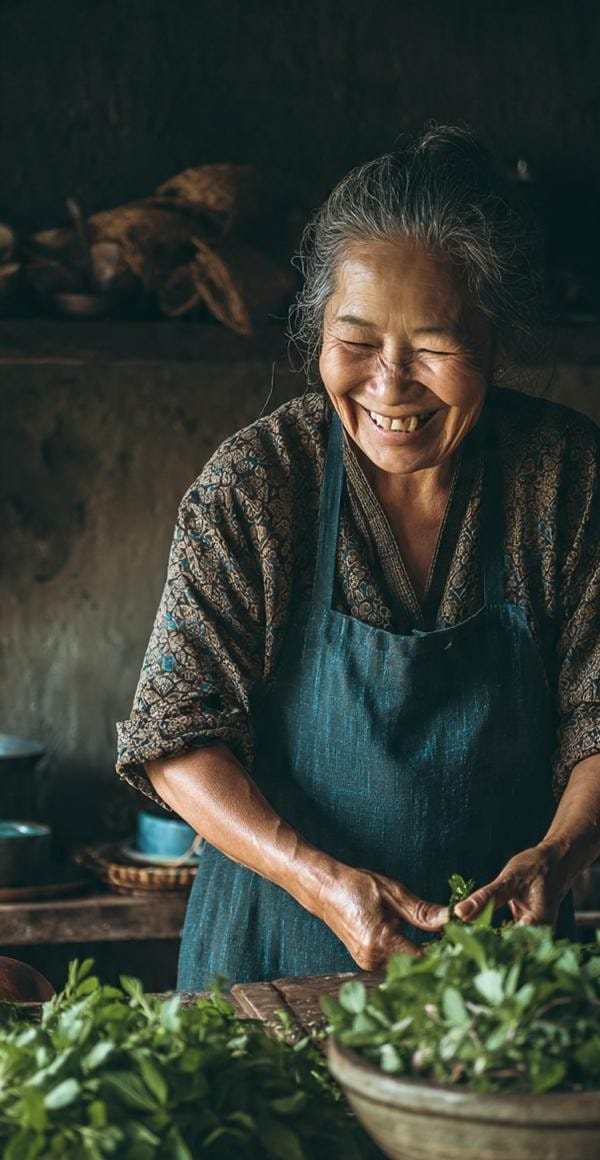
I watched a Lao Aunty make larb mo at a family gathering in Plano. She did something the recipe books don't mention: she took the mint leaves in her palm and bruised them before tossing them into the bowl with the pork.
She bruised every leaf. Not tear — bruise. Press it between her thumb and forefinger until the oils released. Then she tossed the whole handful into the warm pork and mixed it with her hands.
I asked her why. She said: "If you don't wake up the mint, it tastes like grass. You have to wake it up first."
She's been making larb that way for 45 years. Every batch. Every time.
The Aunty's Larb Method
- ½ lb ground pork (70/30)
- 3 tbsp lime juice
- 2 tbsp fish sauce
- 1 tsp roasted rice powder (khao khua)
- 1 tsp palm sugar
- ½ tsp salt
- ½ cup fresh mint leaves (the Aunty uses a full cup — "more mint, more life")
- ½ cup fresh cilantro
- ¼ cup green onions
- 2 bird's eye chilies
- 1 shallot
The Aunty's Method (With Her Upgrades)
- Toast the rice powder first. 5–6 minutes, deep golden, grind fine. The Aunty grinds it slightly coarser than most — "like sand, not flour" — so there's still a slight crunch. Set aside.
- Sear the pork. High heat, no oil, 2–3 minutes until just barely cooked. Still slightly pink in the center. It finishes in the bowl. Transfer immediately.
- Make the dressing in the bowl. Lime juice, fish sauce, palm sugar, salt, khao khua. Toss thoroughly while pork is hot. The fat emulsifies with the lime and fish sauce into a light dressing.
- The Aunty's upgrade — bruise the mint. Take the mint leaves in your palm, one at a time. Press between thumb and forefinger until you feel the oil release and smell the mint. Don't tear. Bruise. Do this for every leaf. It takes 2 minutes. The Aunty doesn't rush this step. "The mint has to wake up," she says.
- The Aunty's second upgrade — add cilantro stems. Most people use cilantro leaves only. The Aunty uses stems too — the stems have more intense cilantro flavor and a slight crunch. Chop them finely. Add them with the leaves.
- The Aunty's third upgrade — more mint than meat. Most larb recipes use ¼ cup herbs for ½ lb meat. The Aunty uses 1 cup mint + ½ cup cilantro for ½ lb meat. That's a 3:1 herb-to-meat ratio. "The meat is just the carrier," she says. "The herbs are the larb." She's right.
- Toss everything together by hand. The warm pork wakes up the bruised mint. The herbs wake up the dressing. The dressing wakes up the meat. Everything wakes everything else up.
- Serve immediately. The Aunty serves it within 60 seconds of finishing. "If you wait, the herbs go to sleep again."
The Intelligence
The mint bruising upgrade: Mint leaves contain essential oil glands (trichomes) on the surface of the leaf cells. Bruising ruptures these glands and releases the essential oils (primarily menthol and menthone) into the air and onto the warm pork. Tearing cuts through cell walls but doesn't uniformly rupture the oil glands — some release, some don't. Bruising with palm pressure ruptures every gland on the surface of each leaf. The result: mint aroma that hits your nose before you even taste it. The Aunty's method releases approximately 2–3x more mint essential oil than plain torn leaves. You can taste the difference in the first bite.
The herb-to-meat ratio upgrade: The Aunty's 3:1 herb-to-meat ratio makes larb fundamentally different from meat-forward versions. Each bite is approximately 75% herb, 25% meat — the herbs aren't garnish, they're the structure. The mint brightness, the cilantro depth, the chili heat, the shallot crunch — they're all competing with the pork instead of decorating it. This is the version that makes people ask for the recipe. The meat-forward version doesn't get asked for.
The cilantro stem upgrade: Cilantro stems contain 2–3x more of the aromatic compounds (aldehydes, particularly (E)-2-decenal) than the leaves. They also have a slight crunchy texture that the soft leaves don't have. Using stems + leaves instead of leaves-only doubles the cilantro flavor contribution and adds a textural contrast. The Aunty figured this out because she hates wasting food — the stems were there, so she used them. Turns out they're better than the leaves.
Troubleshooting — larb tastes like meat with mint on top: You didn't bruise the mint and you used the wrong herb ratio. Fix both at once: bruise every leaf, use more herbs, toss by hand. The larb should taste like herbs with meat in it, not the other way around.
The Science Notes
The bruising mechanism: Mint trichomes (oil glands) are small sacs on the leaf surface that contain menthol, menthone, and other essential oils. Mechanical pressure (bruising between thumb and forefinger) ruptures the trichome walls and releases the oils. The released oils are volatile — they evaporate at room temperature and are detected by olfactory receptors before the food even reaches the tongue. This is why the Aunty's larb hits your nose before it hits your tongue. Tearing leaves ruptures some trichomes but leaves others intact. Bruising ruptures them all.
The lime juice carryover: The warm pork (130–140°F) partially cooks the lime juice (citric acid) through residual heat, creating a light chemical reaction between the acid and the pork surface proteins. This is similar to the beginning of ceviche — the acid denatures surface proteins, creating a tender, slightly cured texture on the pork surface. The result is meat that tastes juicier and more tender than raw-cooked pork, without any actual cooking time. The Aunty doesn't know this is happening. She just knows the larb tastes better when the pork is still warm when it hits the lime.
Why serve immediately: Fresh herbs lose their volatile aromatic compounds over time — approximately 40–50% of the mint essential oil evaporates within 30 minutes of bruising at room temperature. The cilantro compounds degrade more slowly but still lose 20–30% over the same period. The pork fat solidifies slightly as it cools, changing the mouthfeel. The Aunty's 60-second rule ensures every bite has maximum herb aroma, bright dressing, and warm pork. Leftover larb (refrigerated and reheated) is still good, but it's never the same as the version eaten 60 seconds after assembly.
Original recipe — reverse-engineered from watching a Lao Aunty make larb mo at family gatherings in Plano. She's been making it this way for 45 years. The bruising upgrade is hers. The science is mine. The recipe is ours.