Aunty's Filipino Paksiw na Isda — The One That Makes You Sweat

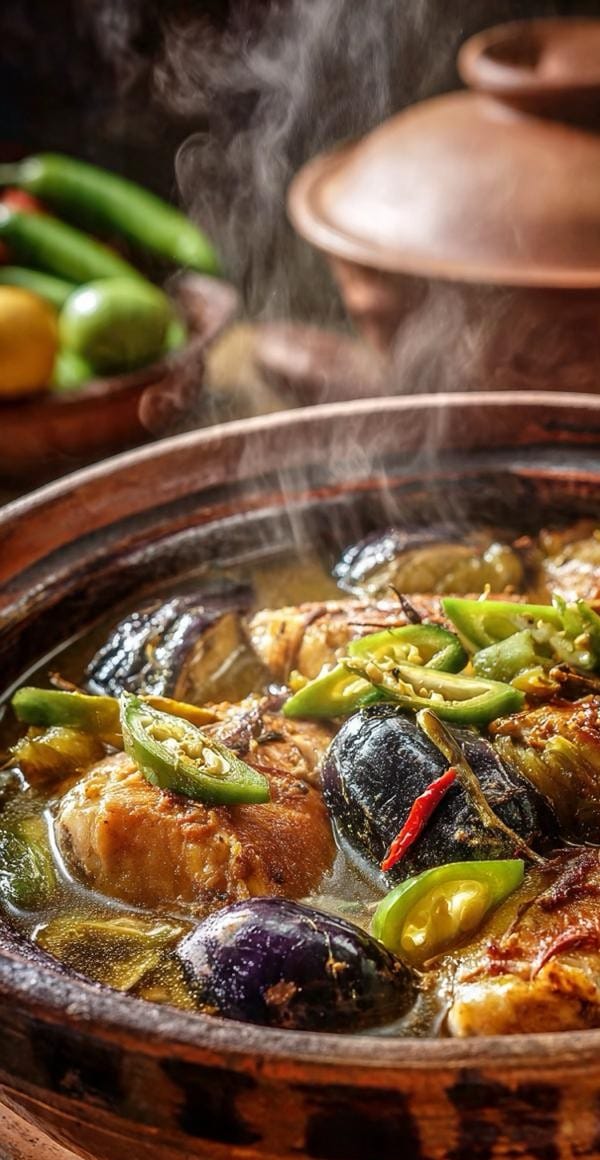
Aunty's Filipino Paksiw na Isda (Fish in Vinegar) — The One That Makes You Sweat
Every Filipino household has their paksiw recipe. The Aunties don't write it down. They just know: how much vinegar, how long to simmer, when the fish is done without checking a thermometer.
Paksiw na isda is vinegar-poached fish with ginger and bay leaves. It sounds simple. It's not. The vinegar doesn't just cook the fish — it preserves it, tenderizes it, and creates a sour-savory broth that you drink from the bowl at the end.
This version came from watching my Filipino friend's Aunty make it, asking questions, failing twice, and then getting it right on the third try.
What You Need
- 2 lbs whole fish (milkfish — bangus — is the traditional choice, but red snapper or sea bass works)
- ½ cup cane vinegar (sukang iloko)
- ½ cup water
- 1-inch piece ginger, sliced into coins
- 1 head garlic, cloves peeled and smashed
- 4 bay leaves
- 1 tbsp whole black peppercorns, crushed
- 2 Thai bird's eye chilies, optional (for heat)
- 1 tbsp fish sauce (patis)
- 1 tbsp cooking oil
The Method
- Prep the fish. Scale and gut the fish if not already done. Score both sides with 3 diagonal cuts — this lets the vinegar penetrate the flesh. Rinse under cold water and pat dry. The fish should feel clean and firm.
- Layer the aromatics. Heat oil in a heavy-bottomed pot over medium heat. Add garlic, ginger, bay leaves, peppercorns, and chilies (if using). Sauté 2 minutes until fragrant — the garlic should be golden on the edges, not brown. This aromatics base is the flavor foundation.
- Add the vinegar and water. Pour in vinegar and water. Bring to a boil. Let it boil hard for 2 minutes — this cooks off the raw vinegar edge and starts the poaching process.
- Add the fish. Lower the fish into the pot gently — don't drop it. It should be mostly submerged in the liquid. Add fish sauce. Do not cover the pot — the Aunties never cover it during the first 10 minutes. The open pot allows some of the vinegar aroma to escape while the fish poaches.
- The simmer. Keep it at a gentle bubble for 10–15 minutes. Don't boil hard — the fish will break apart. Don't simmer too gently — the fish won't cook through. The liquid should bubble lazily around the fish. Baste the fish occasionally with the broth using a spoon.
- The doneness check. The fish is done when the flesh pulls away easily from the bone and the thickest part of the fillet is opaque. Don't overcook — paksiw fish should be moist, not flaky and dry. If you're unsure, pull a test piece from the thickest part and check. Better slightly under than over.
- Serve. Transfer the fish to a serving dish. Pour the broth over the top. Serve with steamed rice. The broth is half the dish — drink it from the bowl or spoon it over rice.
The Intelligence
Why no cover for the first 10 minutes: Covered cooking traps all the volatile vinegar compounds in the pot, creating a more sour broth. Uncovered cooking allows some of the acetic acid vapor to escape while the water vapor condenses back into the pot — the result is a broth that's sour but not biting. The Aunties know this by smell: if it smells like a pickle factory, you covered it too long. If it smells like fish and ginger, you did it right.
The vinegar-cooks-the-fish mechanism: Vinegar (acetic acid, 5–6% concentration) denatures fish proteins at a lower temperature than water alone — approximately 140°F vs. 160°F for plain water. This means the fish cooks faster and more gently in vinegar-water than in plain water, resulting in a moister, more tender final product. The acid also slightly tenderizes the connective tissue in the fish, making it flake more easily without being mushy.
Troubleshooting — too sour: Add a splash of water and simmer uncovered for 2 more minutes — some of the vinegar will evaporate. Don't add sugar to fix sourness in paksiw — it changes the character of the dish. Paksiw is supposed to be sour. If it's genuinely too sour, you used too much vinegar. Next time, start with ⅓ cup and build up.
What to do with leftovers: Paksiw tastes better the next day. The vinegar and ginger infuse overnight and the flavors deepen. Refrigerate the fish in the broth. Reheat gently — don't boil it or the fish will break apart. Cold leftover paksiw is also excellent — the vinegar preserves the fish for 2–3 days in the fridge.
Creative twist — the chili-lime finish: Squeeze fresh lime over the top just before serving and scatter sliced fresh chilies across the fish. The lime brightens the sourness and the fresh chili adds a different kind of heat than the cooked chilies in the broth. The Aunty version is simple and pure. The upgraded version adds complexity on top without changing the soul of the dish.
The Science Notes
Why cane vinegar (sukang iloko): Cane vinegar is made from fermented sugarcane and has a mellow, slightly sweet depth. White vinegar is made from grain alcohol and is harsh and one-note. In paksiw, where the vinegar is the primary cooking liquid, the quality of the vinegar is the single most important ingredient decision. Good cane vinegar + mediocre fish = good paksiw. Great fish + white vinegar = bad paksiw. The vinegar is not a background note — it's the structure of the dish.
The fish selection: Milkfish (bangus) is the traditional choice because it's widely available in the Philippines, affordable, and has a rich, fatty flesh that stands up to the vinegar. Red snapper and sea bass are good substitutes for American kitchens where bangus is harder to find. Avoid lean white fish (cod, halibut) — they dry out too quickly in the vinegar poach. You want a fish with at least moderate fat content.
The open-pot evaporation balance: During the uncovered 10-minute simmer, water evaporates from the surface while acetic acid vapor also escapes. Acetic acid is more volatile than water (boiling point 244°F vs. 212°F for water), so it evaporates faster. The uncovered simmer reduces both the liquid volume and the vinegar concentration simultaneously — the result is a broth that concentrates in flavor without becoming disproportionately sour. This is why the Aunties never cover it.
Original recipe — watched the Aunties make this at a Filipino family gathering, reverse-engineered from observation, tested and adjusted in my own kitchen. The vinegar cooks the fish. The broth finishes it.